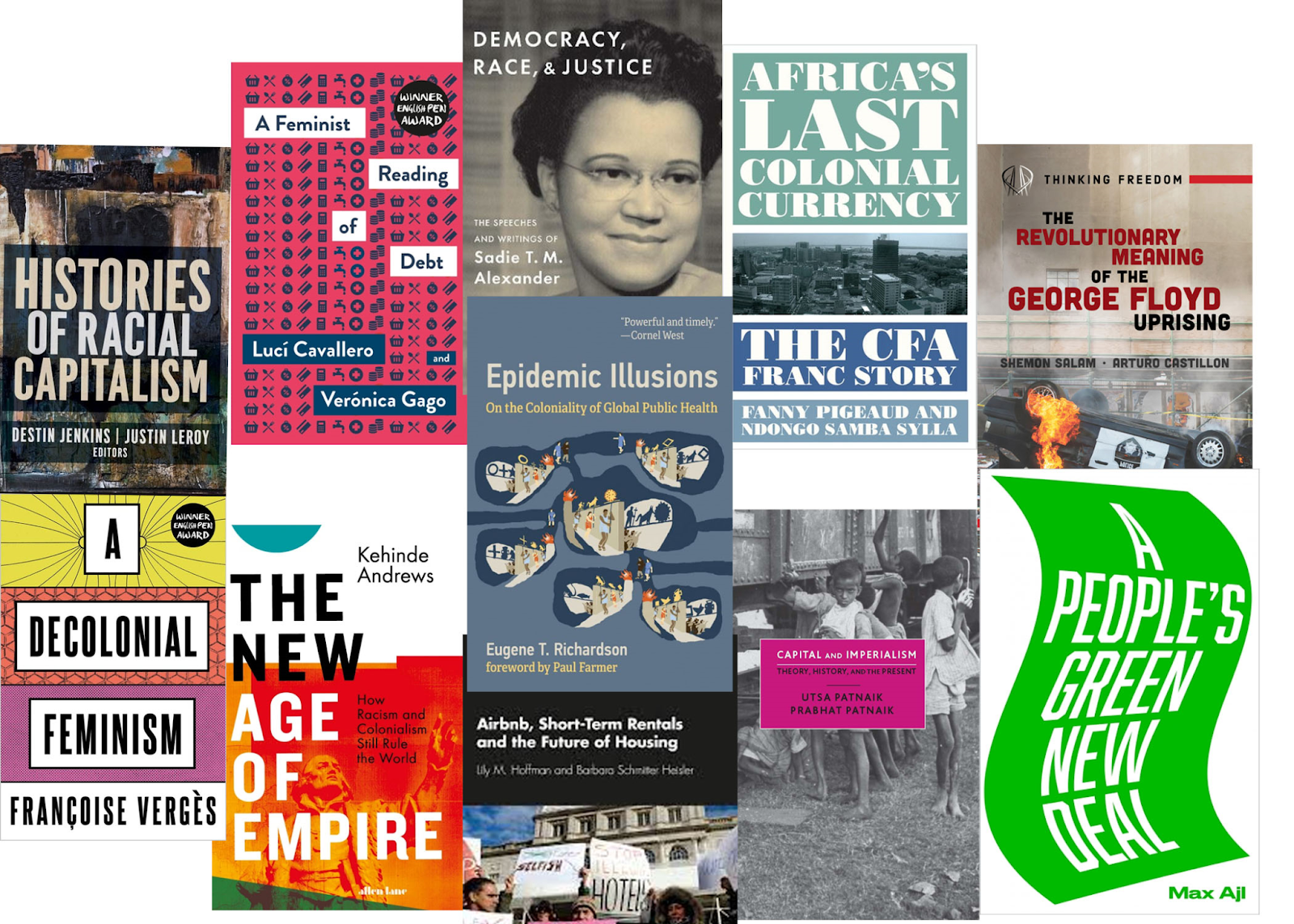
D-Econ’s Seasonal Alternative Reading List – 2025, pt. 1

It’s been quite a year thus far, and we have some reading recommendations from new books on economics that were published this year that you may have missed either because of the identity of the author, or their geographical location, or because the topics are not typically considered interesting to those interested in reading about the economy. We include 11 books that cover a range of topics that we think provide a richer understanding of socioeconomic phenomena and are therefore crucial to understanding economics and the world.

With the escalation of the othering of migrants all over the world and increasing repression of movements opposing genocide in Palestine, especially in the United States, this time around we are reading two books that look at the political economy of the United States with obvious global repercussions: one around the business of incarceration of immigrants and one around how decolonization movements in the rest of the world has shaped United States politics and economics. We also love reading about the field of economics, and therefore we include a new and exciting volume on radical political economics and about why we need to decolonize feminist economics. Excellent beach reads, in our opinion! The race to general artificial intelligence has come to define our time, and our reading list would be incomplete without a comprehensive look behind the scenes of one of the biggest firms in the business: OpenAI. The environmental cost of AI is increasingly becoming evident, as is the rapacious nature of the resource-grab to support the development of these enterprises. Therefore, we also have been reading two new books on the topic: one on environmental transformation, capitalist expansion, agrarian extractivism and local resistance across Senegal’s River Delta and one on grassroots resistance to the privatization and commodification of water using the lens of global solidarities. Relatedly, we include a short but powerful new book on the intertwined colonisation of Palestine and imperial capitalist expansion enabled by fossil fuels’ destruction of the Earth. Finally, we always love reading about third world movements, and this time this meant reading a new autobiography of Andree Blouin, an analysis of political and social transformations in four pivotal Global South nations- Brazil, India, China, and South Africa, and about representation of anti-imperial history through the periodical of the Organization for the Solidarity of the Peoples of Africa, Asia and Latin America, the Tricontinental.  

We hope you enjoy these books! As always, please let us know if you have any suggestions for our next reading list. 

Empire of AI: Inside the Reckless Race for Total Domination

By Karen Hao

Generative AI has become ubiquitous in our lives. One of the most successful companies in the AI industry is OpenAI, which is in quest to develop artificial “general” intelligence, described by the founder of OpenAI, Sam Altman, as the “most transformative and beneficial technology humanity has yet invented.” However, behind the development of this seemingly transformative technology is the consumption of “previously unfathomable” amounts of data, labour, computing power, and natural resources. It is therefore not surprising that Hao likens the leading power players in the AI space to Empires that exploit and subjugate workers and seize and extract resources for their own enrichment, often by theft and compromising sovereignty, among other things. This book, which explores how OpenAI has operated and shaped the AI industry, and the global economy at large, is compulsory reading for an era in which it is impossible to open any application on your phone or computer without some type of AI feature being pushed on us.  

Immigration Detention Inc: The Big Business of Locking up Migrants

By Nancy Hiemstra and Dierdre Conlon

With growing anti-immigrant sentiment all over the world, especially in the United States, this book provides a shocking, yet essential look into the political economy of depriving immigrants of their freedom. Specifically, Hiemstra and Conlon show that since corporations and local governments in the United States now depend on the financial rewards that detaining immigrants brings, an incentive to incarcerate even more immigrants in worse and worse conditions is created. Furthermore, they also show how many people and institutions are implicated by the vicious cycle of more and more profits being generated by locking up more and more human beings. This has altered society’s moral compass and also internationalized the problem: with detention becoming a nearly universal response to “unauthorized” international migration. 

The Internal Colony Race and the American Politics of Global Decolonization

By Sam Klug

This book reveals and interrogates the importance of global decolonization for the divergence between mainstream American liberalism and the Black freedom movement in post-War America. As global decolonization is generally underappreciated as a force that has shaped American politics, through this book Klug allows the reader to understand different American political movements in a new way. In doing so, Klug demonstrates how debates about self-determination, post-colonial economic development, colonization and decolonization have shaped American politics, even in spheres that are often primarily thought of as related to domestic policy, such as issues of race and social class. Overall, the book provides us with a history that broadens our understanding of ideological formation and the global forces that shape it. Buy the book here.

Decolonizing Feminist Economics: Possibilities for Just Futures

By Gisela Carrasco-Miró

This book is a much-needed critique of feminist economics. Carrasco-Miró traces how certain parts of feminist economics have remained locked in a Western-centric modernism and how they have failed to engage with the critiques of Eurocentrism that other social science fields have had to deal with. As an alternative understanding, she introduces what decolonization of feminist economics would involve, and in doing so, she explores the relationship between colonialism, capitalism, heteropatriarchy and ecological degradation. Moving beyond the usual disciplinary boundaries, Carrasco-Miró draws on a range of scholarship from across the world to put forward a transdisciplinary and radical view of feminist struggles which are ultimately global in nature. You can buy the book here.  

Radical Political Economics: Principles, Perspectives, and Post-Capitalist Futures

Edited by Mona Ali and Ann E. Davis

This exciting collection of essays demonstrates that radical political economics is a vibrant and dynamic field. The chapters are written by brilliant political economists from across the world and they touch on a range of urgent topics, including class conflict, ideology, financialisation, feminism, imperialism, crises, social protection, migration, development assistance, state capitalism, worker cooperatives, economic development, and climate change. The contributions together offer a sharp critique of capitalist institutions as well as of mainstream economics, and in doing so they also reveal the underlying structures and dynamics of global capitalism. In addition to its sharp and convincing critique of contemporary problems, the radical political economy of this book also offers ideas and policies to change capitalism in ways that are more beneficial for people and the planet. Buy the book here.

My Country, Africa: Autobiography of the Black Pasionaria

By Andrée Blouin

My Country, Africa

Andrée Blouin’s autobiography—long out-of-print and now available under the supervision of her daughter, Eve Blouin—narrates the story of, per one of the monikers used by the 1960s newspapers, the “Most Dangerous Woman in Africa”. Born to a Banziri mother and a French colonial father, Blouin was in the thick of the decolonization movements across Africa throughout the 1950s and 1960s: from revolutionary work in Guinea and, most notably, the Congo (Blouin, a speechwriter and diplomat in Patrice Lumumba’s government, wrote Lumumba’s independence day speech) to an exile in Algiers (where, as Eve Blouin reminds us Amílcar Cabral noted, revolutionaries make pilgrimage) and, finally, France. The memoir’s title is a nod to Blouin’s expansive pan-African nationalism, whose enactment and promise intersect with her own life perched at various conflicting identities. As Blouin concludes her autobiography, “speaking of my life has been my way of speaking of Africa”—a story that will be of interest to anyone committed to decolonial struggles around the world. Buy the book here.

Teaching with Tricontinental: A Sourcebook for Students Working with Radical Periodicals

Edited by Danny Millum and Paul Gilbert

Cover image for Teaching with Tricontinental

Launched during the 1966 Tricontinental Conference, Tricontinental was the official periodical of the Organization for the Solidarity of the Peoples of Africa, Asia and Latin America until the latter’s dissolution in 2019. What can one learn from the representation of anti-imperialist history in the pages of such revolutionary periodicals? This open-access edited volume, the fruit of a collaboration between staff and students at the University of Sussex, collects a series of possible textual and audio-visual answers: engaging with archived radical periodicals, inter alia, fosters “radical imaginations and emancipatory futures” (p. 18) that may otherwise seem foreclosed; reveals the importance and fragility of archival and publishing infrastructures; sensitises to the textual and paratextual choices in building international solidarity; and deconstructs Eurocentric historical education, including the lack of tendency “to understand development as coterminous with anti-colonial liberation” (p. 16). The volume is an important, fascinatingly creative pedagogical and emancipatory tool in helping students, and others, re-imagine past visions of the possible into the present and future. The volume is freely accessible here and the digitised collection of Tricontinental issues—an outcome of the University of Sussex workshops—is available here. For digital archives of other radical periodicals, see The Freedom Archives and here.

The Destruction of Palestine Is the Destruction of the Earth

By Andreas Malm

The Destruction of Palestine Is the Destruction of the Earth

Two catastrophes underlie Andreas Malm’s “longue durée analysis of fossil empire in Palestine”: the unfolding genocide in Palestine, actively abated by the capitalist core in the West, and the ecological destruction wrought by fossil fuels, which “kill people, randomly, blindly, indiscriminately”. These catastrophes are not independent, Malm argues, as he takes us back to a single moment of co-determination between the two: the British empire’s first use of steam warships, powered by fossil fuels, in the 1840 pulverisation of the Palestinian town of Akka. The pulverisation fulfilled many aims: imperial (it cut short Egypt’s burgeoning and short-lived contest of the Ottoman and British empires), economic (it supplied outlets for Britain’s overproducing cotton industry), and ideological (it opened, to a proto-Zionist project, the Palestinian land, where the British, in Lord Palmerston’s words, hoped to implant “a great number of wealthy capitalists”). In this powerful pamphlet, Malm narrates the intertwined colonisation of Palestine and imperial capitalist expansion enabled by fossil fuels’ destruction of the Earth. Initially published on the Verso Blog, and a step towards a larger future sequel to Malm’s Fossil Capital, the essay in this edition is accompanied by Malm’s response to his critics. Buy the book here

Land, Capital and Extractive Frontiers:Social Conflict and Ecological Crisis in the Senegal River Delta

By Maura Benegiamo

Using ethnographic and archival research, Maura Benegiamo explores the complex interplay between environmental transformation, capitalist expansion, agrarian extractivism and local resistance across Senegal’s River Delta. While examining land grabs, the author traces its colonial roots to establish links with the current ecological crisis stemming from the relationship between capital and nature. The book locates how green growth is used as an extractive tool under neocolonial capitalism in the Global South while providing insights into how communities respond to such policies using grassroot struggles for justice. 

Global solidarities against water grabbing: Without water, we have nothing 

By Caitlin Schroering

Caitlin Schroering undertakes a powerful examination of grassroots resistance to the privatization and commodification of water using the lens of global solidarities. Drawing on two transnational movements, Schroering highlights how communities are organising and learning from one another across borders to defend water as a public good and a human right. The book delves into the political, ecological, and social dimensions of water struggles, emphasising the role of feminist and anticolonial movements in global activism for water rights. Caitlin’s work is a compelling call to action against extractive systems and for water justice worldwide through collaboration between the Global South and the Global North.

Southern interregnum Remaking hegemony in Brazil, India, China, and South Africa 

By Alf Gunvald Nilsen, Karl von Holdt, Ruy Braga, Ching Kwan Lee and Fabio Luis Barbosa dos Santos

This edited volume undertakes groundbreaking analysis of political and social transformations in four pivotal Global South nations- Brazil, India, China, and South Africa. The authors locate the responses of the governing elites in these four emerging powers to a period of enduring crisis—marked by deep inequalities, popular unrest, and shifting geopolitical dynamics. While employing a Gramscian lens, the book examines distinct hegemonic projects in each country viz. authoritarian neoliberalism in Brazil, neoliberal ethnonationalism in India, digital expansion in China, and patronage-violence in South Africa. The volume offers a vital contribution to critical political economy as it maps the turbulent reordering of power and its limits in the Global South as a tool of accumulation and legitimation in a period of exhausted neoliberalism.

This list was compiled for D-Econ by Devika Dutt, Afreen Faridi, Ingrid Harvold Kvangraven, and Marina Uzunova

D-Econ’s Seasonal Alternative Reading List – 2024, pt. 2

Most of us might still be processing 2020, and yet 2025 is just around the corner! As 2024 wraps us, here are some new books on economics that were published this year that you may have missed either because of the identity of the author, or their geographical location, or because the topics are not typically considered interesting to those interested in reading about the economy. We include 10 books that cover a range of topics that we think provide a richer understanding of socioeconomic phenomena and are therefore crucial to understanding economics and the world.
This time we include a new edition of an important book on global labour processes and their manifestation in Dominican history. We have also been reading two new books about childbirth and social reproduction. One looks at the commodification of childbirth and the economic pressures that influence the choices and risks associated with childbirth, while the other  one explores interplay between ecological grief and neoliberalism, capitalism and settler colonialism through the author’s own experience of new motherhood. On a related note, we also read two new books on the ecological crisis, one that analyses the evolution of the global oil market and how it has been shaped by global capitalism, and one that explores the relationship between colonialism, capitalism, imperialism and ecological crises. Given the ugliest current outcome of colonialism in the form of the ongoing genocide in Palestine, we have also been reading a new collection of essays on Palestine that highlight the centrality of the Palestinian issue in global struggles against capitalism, imperialism, racism and misogyny. We also include a new book that explores what anti-colonialism means today, and an incredible collection of essays, speeches, poems, stories and reflections from the 60 anniversary commemoration of the 1958 All-African People’s Conference. 

We hope you enjoy these books! As always, please let us know if you have any suggestions for our next reading list.

Peasants and Capital: Dominica in the World Economy

By Michel-Rolph Trouillot

This is a new edition of the widely read 1989 book by the world-renowned Haitian anthropologist, historian, and writer, Michel-Rolph Trouillot. The book is highly innovative in its ethnographic study of peasantry in Dominica not as left-over practices from the premodern era but as central for the global capitalism itself. With attention both to the local banana-producing villages in Dominica and the links between them and the global world system, Trouillot shows how Dominican peasant farmers are an important source of profit for multinational corporations. Beyond contributing to novel theorisation about global labour processes, the book is also a highly praised account of Dominican history and society. The methodological ethnographic approach of studying peasantry through a multi-scalar lens is highly relevant for economists trying to understand global value chains as well as people in the general public simply trying to understand global capitalism. Buy the book here.

The political ecology of colonial capitalism
Race, nature, and accumulation

By Bikrum Gill

This book is an exciting exploration of the relationship between colonialism, capitalism, imperialism and ecological crises, that guides the reader to the inherently international nature of these processes. The book situates the phenomenon of the “global land grab” within a historical and theoretical context of the colonial capitalist world system. The author introduces a theoretical framework which highlights how the co-production of race and nature has been crucial in creating the “ecological surplus” necessary for capitalist development. It is an important read for economists, and a broader audience, as it presents arguments for how in order to address contemporary ecological and social crises, we must understand the intertwined histories of race, nature, and capitalism. The book is available in hardcover as well as ebook format here.

Going Into Labour: Childbirth In Capitalism

By Anna Fielder

This book is a Marxist analysis linking together “the powerful physiological and emotional process” of childbirth labour with the “the labour through which people create and produce things, in order to eat, stay warm and survive” (p. 1) as two socially significant areas subsumed under capitalism. The book raises questions around the commodification of birth and the economic pressures that influence the choices and risks associated with childbirth. It examines childbirth as a form of labour, while highlighting how birth workers tend to be undervalued and exploited within a capitalist system. The book also explores political issues around how various forms of oppression, such as colonialism, racism, sexism, cis- and heteronormativity, intersect and create compounded impacts which shape contemporary childbirth practices. The author provides insights into how economic systems shape healthcare practices and the commodification of essential services, while calling for systemic change to create more equitable and just birthing practices. The book is available as a paperback and as an ebook here.

Can Africans Do Economics?

By Grieve Chelwa, Marion Ouma, Redge Nkosi

This inspiring new book redefines development as a process of emancipation rather than simply one of economic growth. It challenges conventional economic theories and practices through an examination of the intimate link between political independence and economic progress. The book explores the intersection of economic development and freedom across the Africa, informed by ideas by African leaders such as Thomas Sankara and Julius Nyerere. The book presents scholarship from a range of economists “[c]ombining historical context with forward-thinking policy proposals … for transformative policies grounded in African realities, and rejecting foreign-led interventions on the continent”. In addition to historical context, the book presents forward-thinking policy proposals aimed at transformative change, addressing issues such as social policy, poverty, and monetary policy in the African context. This reading provides a comprehensive analysis of how economic development can be reimagined to better serve the needs and aspirations of African people. This book is available as a paperback in a number of places, such as 1, 2, 3 and 4.

The Unfinished Business of Liberation and Transformation: Revisiting The 1958 All-African People’s Conference

By Dzodzi Tsikata, Edem Adotey, and Mjiba Frehiwot

This is an incredibly exciting and timely book. The chapters are not simply academic accounts, but rather include essays, speeches, poems, stories and reflections from the 60 anniversary commemoration of the All-African People’s Conference, which originally took place in 1958. A central theme is Pan-African efforts toward and visions of liberation since independence and the importance of acknowledging that the liberation of one person and country is intertwined with that of another. The anniversary was a collaboration between the Institute of African Studies, the Trades Union Congress of Ghana, the Socialist Forum of Ghana, Lincoln University, and the Third World Network Africa and the contributions reflect this diversity of perspectives. The contributions do not simply look backwards and reflect, but rather they look forward and represent a call for action for present and future pan-Africanists. Buy the book here.

Being Anti-Colonial

By Jayan Nayar

At a moment when confusion regarding what anti-colonial, decolonial, and decolonisation actually means, this book is a very welcome intervention. It lays out a clear argument for what it means to be anti-colonial and how this differs from decolonial interventions. Nayar makes a radical call to re-engage with what he calls the anti-colonial ethos, which emphasizes the need to confront enduring global colonial architectures. At the same time, Nayar shows how contemporary calls for decoloniality tend to overlook the praxiological foundations of anti-colonial struggle, removing itself from the politics of resistance. As such, this book is an invitation to challenge the academic community using the colonial/decolonial terminology to revisit and critically re-engage in conversations about radical anti-colonial theory and praxis. It will be a useful contribution both for scholars and students already engaging with these debates as and for readers that are new to these debates. Buy the book here.

Palestine in a World on Fire

By Katherine Natanel and Ilan Pappé

Natanel and Pappé’s collection of interviews is poignant and timely, demonstrating the centrality of the Palestinian cause to global struggles against capitalism, imperialism, racism and misogyny. Establishing Palestine as not just a lens, but a crucial point of entry for analysing and understanding global crises, ‘Palestine in a World on Fire’ illustrates how dialogues, strategies and tactics engaged in by Palestinians and supporters can be (and have been) utilised in resistance movements across the world. Featuring influential activists, these interviews transcend time, resolutely opposing narratives situating 7th October 2023 as the genesis of violence. Natanel and Pappé draw out the complex nature of struggle, positing people as both victims and agents through solidarity which confronts colonial conditions. Building narratives around shared concerns, they argue, can become power in itself: but in this pursuit, we are challenged to critically rethink the boundaries of our imaginations, the implications of our language, and our understanding of complacency. Buy the book here.

Hot Mess: Mothering Through a Code Red Climate Emergency

By Sarah Marie Wiebe

‘Hot Mess’ is rooted in Wiebe’s experience of new parenthood amid climate crisis, after record-breaking heat waves in British Columbia hospitalised and separated her from her nursing baby. She uncovers the interplay between ecological grief and neoliberalism, capitalism and settler colonialism through a book that weaves her own difficult transition to motherhood with her academic work on the structures surrounding and reproducing climate emergency. Organised through colour-coded chapters, based on Wiebe’s repeated spells in hospital, she guides readers through diverse terrain: from climate anxiety, to caesareans, to circular economies of care, the ‘collapsing boundaries’ between the personal, political and planetary are highlighted. As a critical ecofeminist scholar, Wiebe details alternative ways of organising, including circular economies and indigenous land structures, accompanied by a vision of radical care between humans and the planet, rejecting capitalism’s extractivist nature, that can help us achieve this. The book can be bought here.

Crude Capitalism: Oil Corporate Power and the Making of the World Market

By Adam Hanieh

This excellent new book traces the history of how a “simple sticky goo” came to be at the core of the global economy and our energy systems. It also shows how the discovery and use of oil has shaped global markets, extreme wealth, global institutions, and the development of global capitalism. One of the most striking features of this book is the demonstration of the centrality of oil in our daily lives, not just in the form of energy, but also in the form of plastics and other petrochemicals that are almost ubiquitous. Therefore, it moves beyond just the focus on the “upstream” segment of oil exploration and extraction, and discusses what oil becomes once it is out of the ground. Hanieh provides an in-depth yet accessible analysis of the key players in the oil market, not just in the United States, but also in other parts of the world, and the relationship with production of other goods and finance. As he points out, this is crucial as we cannot see key players in oil production merely as case studies, but part of the larger world market with “reciprocal interdependencies”, which has many implications for US hegemony today. Importantly, by discussing what the energy transition looked like from coal to oil, and critically analyzing what in fact is an energy transition, Hanieh provides crucial insight for whether a non-fossil fuel economy is possible and how it can be achieved. An absolute must read as we come to the end of the hottest year on record in human history. 

Beyond Liberalism

By Parabhat Patnaik

This new book provides a Marxist critique of liberalism from one of the most important Marxist economists today. With incredible clarity, Patnaik lays out the key features of classical liberalism and the central importance of individual freedom within it. Essentially, classical liberalism, which Patnaik associates with liberal democracies, sees individual freedom as something that is often threatened by specific agents, like other individuals, or the state, or economic agglomerations like monopolies. However, it does not see individual freedom as something that is threatened by the normal functioning of the system as a whole. He contrasts this with the formulation of “new” liberalism, associated with social democratic systems, which does recognize that individual freedom is constrained by the operation of the system itself. This is because laissez-faire capitalism systemically produces large-scale unemployment, and that this requires intervention by the state to protect individual freedom. Patnaik argues that both classical and new liberalism are limited because the operation of the system of capitalism limits the ability and willingness of the state to intervene to protect individual freedoms within its jurisdictions. Furthermore, he argues that this problem is exacerbated by globalization. This book is a fascinating new treatise on liberalism, and weaves together economics, political philosophy, and an agenda for action, which Patnaik argues, are deeply integrated.

This list was compiled for D-Econ by Alex Arnsten, Devika Dutt, Maya Fitchett, and Ingrid Harvold Kvangraven

D-Econ Seasonal Alternative Reading List 2024- Part I

Somehow we are already 8 months into 2024 (how is it August already?), and here are some new books on economics that were published this year that you may have missed either because of the identity of the author, or their geographical location, or because the topics are not typically considered interesting to those interested in reading about the economy. We include 10 books that cover a range of topics that we think provide a richer understanding of socioeconomic phenomena and are therefore crucial to understanding economics and the world.

This time around, we are reading two new important books around feminist interventions in understanding work around production and reproduction by blurring the boundary between what are often considered as distinct parts of the economy, but with a decidedly distinct focus. One centers work and workers in the story of environmental change and the other focuses on, among other things, decentering the costs of social reproduction to emphasize the relationships that often form the basis for social reproduction “that invoke love, pain, joy, exhaustion, solidarity, and exploitation.” We know that the burden of the work of social reproduction is disproportionately borne by women, however, both these books highlight the differential and racialized nature of this burden. Relatedly, therefore, we have also been reading about the role of White women in the United States in the slave trade. Importantly, it shows how white women fought for their own social and economic empowerment based on their ownership of slaves. We also include two books on revolutionary thought and thinkers in Africa, about movements from across the continent, and with interviews with anti-apartheid activists, radical organizers, journalists and former students of Africa’s anti-colonial liberation thinkers. In a related vein, we have been reading a critical commemoration of the legacy of Vladimir Lenin. They make for some really inspiring reading! We have also included two books that looks at the political economy and history of two countries in the world that many of us in the Anglosphere do not know much about, and place them in the global context: Iran and Guyana. As always, we love reading about the economics discipline, and we include an interesting new book looking at economics imperialism. Finally, 10 months into the intensifying genocide of Palestinian people, we include a brilliant new book that systematically show the role played by Israeli universities in constructing and perpetuating Israeli apartheid and genocide in Palestine. Therefore, it becomes evident that Israeli academic institutions are legitimate targets of Boycott, Divestment, and Sanction movement, despite claims by Israeli academics to the contrary. 

We hope you enjoy these books! As always, please let us know if you have any suggestions for our next reading list. 

Depletion: The Human Costs of Caring

By Shirin Rai

In this new book, Shirin Rai explores the labor that goes into the reproduction of life in different contexts and with differential resources, which is largely performed by women across countries and cultures. In order to do that she uses the concept of “Depletion”, or the human cost of social reproductive labor, which affects everyone as individuals, households, and communities, often drawn upon as a “free good.” She shows that the unequal system of social reproduction harms those who care, and unequally affects life that needs to be sustained and reproduced. Rai also extends the concept of depletion to include planetary care, and argues that this helps us connect ecological harm and harm to individuals, households, and communities. Using theories of social reproduction and fascinating and varied case studies, Rai makes an important new contribution to our understanding of production and reproduction, including the need for and movements and institutions that in different contexts have worked and continue to work to reverse depletion. She also decenters the focus on costs of social reproduction to highlight the relationships that often for their basis that invoke love, pain, joy, exhaustion, solidarity, and exploitation. Importantly, she also challenges the neat binary between productive and reproductive realms using the concept of depletion. In her own words, “Depletion argues that strategies for recognizing, measuring, pluralizing, and reversing the harms of depletion are urgently needed in the context of the growing costs of care and caring for our social and ecological worlds.”  Order it here.

Towers of Ivory and Steel: How Israeli Universities Deny Palestinian Freedom

By Maya Wind

In this compelling new book, Maya Wind argues that while universities in Israel are often considered as being “exceptionally free” by people and institutions in the West, they are an integral part of the Israeli security state and serve as an extension of its violence. She also takes on the claim made by many Israeli scholars that while the Israeli state may be committing atrocities against Palestinians, it has nothing to do with the Israeli academy. Based on her extensive research of policy documents, state and military memos, and other documents in the Israeli state and military archives and libraries, Maya Wind documents the material ways in which Israeli universities are materially implicated in the systemic violation of Palestinian rights and academic freedom. Israeli academia has been involved in the Israeli project of territorial and demographic replacement which has been central for Israeli statebuilding. Furthermore, students and faculty in these universities have developed and manufactured weapons for Zionist militias since the inception of the Israeli state. In addition, Palestinian universities have also been governed by the Israeli military, meant to specifically prevent them from becoming sites of Palestinian resistance. In this and many other ways, and through rigorous research Wind shows why Israeli universities are legitimate targets of the Boycott, Divest, and Sanction movement against Israeli apartheid. This book is absolutely essential reading today, and the call for BDS has never been more important than when there is an ongoing genocide against Palestinian people. Order it here. And don’t forget to sign the D-Econ BDS Pledge.

Workers of the Earth: Labour, Ecology, and Reproduction in the Age of Climate Change

By Stefania Barca

By centering labor and the working class in environmental change, Barca tells an “unusual” narrative of environmental change, specifically in the context in the period known as the Great Acceleration, the last six decades characterized by unprecedented degradation of earth systems as a result of rapid economic growth. In her analysis, Barca considers humans as a living part of the earth who are also affected by the degradation that affects non-human nature, but unequal distribution of agency, power, and vulnerabilities. Therefore, she positions the planetary crisis as an endogenous problem that requires transformation of the global economy in service of those who work for it as opposed to an external one that requires limiting the global economy over which global capital has mastery. She argues that an obsession with GDP growth is not only ecologically unsustainable, but also unsustainable for workers who labour for it, specifically from environmental hazards like air and water pollution, radiation or electromagnetic exposure, and catastrophic climate events. Using an ecofeminist lens, this book shows how environmental changes in the industrial age have directly affected workers and turned them into ecological subjects. Barca also broadens the labor-environmentalism beyond its focus on waged work and shows that reproductive labor has played an indispensable role in the history of environmentalism. Buy it here

Revolutionary Movements in Africa: An Untold Story

Edited by Pascal Bianchini, Ndongo Samba Sylla and Leo Zeilig

This is a fascinating book that uncovers revolutionary movements of the 1960s and 1970s across the African continent. Covering specific radical projects from Sudan to Madagascar, from South Africa to Mali, the book spans labour movements, student movements, feminist movements, and radical debates such as the famous (but often forgotten) Dar es Salaam debates (which featured intellectual and political giants like Julius Nyerere, Issa Shivji, Walter Rodney, Mahmood Mamdani, Dani Wadada Nabudere, Yash Tandon and others, all engaging with the cutting edge Marxist debates of the time and how they related to Africa). The book maps these movements and ideas and gives some suggestions as to what we can learn from them today. Order here.

Lenin – The Heritage We (Don’t) Renounce

Edited by Hjalmar Jorge Joffre-Eirchhorn and Parick Anderson

This book critically commemorates the 100th anniversary of the death of Lenin on 21 January, 1924. Through 104 contributions, the book is a vast and exciting revisiting of Lenin’s legacy and the relevance of his thinking for understanding contemporary times. The topics that the chapters touch on are vast, the contributors are diverse, and the form of writing varies from poetry, skits, fictional writing, to academic and journalistic contributions. Themes include imperialism, the right to self-determination, dialectics, AI, Black liberation, communist feminism and revolutionary dreaming and organizing. Interestingly, the chapters also put Lenin in conversation with other radical thinkers to trace the scope and changing forms of his influence, such as Amílcar Cabral, Ruth First, and Mao, and they examine his influence in a range of national contexts, from Nigeria, to Iceland, to Sri Lanka. The chapters and short and accessible, making for great beach reading. Order it here.

Capitalism in contemporary Iran: capital accumulation, state formation and geopolitics 

By Kayhan Valadbaygi

This is an important book taking a radical political economy approach to understanding capital accumulation in Iran. Unlike a lot of mainstream literature on Iran, Valadbaygi carefully interrogates how processes of domestic class and state formation are situated in and related to the wider capitalist world market. As such, the book shows how there are connections between the nature of development in Iran and the geopolitical tensions with the West. Starting from the 1979 revolution to contemporary Iran, it provides a historical and contemporary analysis of development in Iran, including an in-depth interrogation of how Iranian neoliberalism has brought about new contested class dynamics in the country, which in turn has impacted the state form and geopolitical strategy. The book is a must-read for anyone interested in understanding Iran beyond the simplistic media reporting on the country. Order it here.

They Were Her Property – White Women as Slave Owners in the American South 

By Stephanie E. Jones-Rogers

This book overturns the widely-held assumption that married white women were passive bystanders in the business of American slavery. On the contrary, Jones-Rogers shows that slave-owning women were sophisticated economic actors that actively engaged in and profited from holding slaves. Indeed, since women tended to inherit more slaves than land, enslaved people tended to be women’s primary source of wealth. Jones-Rogers also documents how white women treated enslaved people as brutally as slave-owning men, dismissing assumptions that women would be more empathetic. Bringing together, women’s history and African American history, this book unpacks how white women actively participated in the slave market and even used it for their own economic and social empowerment. Order it here.

False Prophets

By Matthew Watson

In False Prophets, Matthew Watson examines the two-step movements through which ‘economics imperialism’ has been rolled out across the social sciences. The first step in this process of intellectual colonisation concerned efforts to mathematize economic knowledge. The second concerns the ‘apparently indiscriminate wielding of mathematical market models’. How this plays out in practice is familiar to most of us already: questions of climate justice are subordinated to models seeking the ‘efficient allocation’ of resources; party politics is framed not in terms of  ideological promise and contestation but ‘the purely functional task of identifying the electoral market equilibrium reflected in the wishes of the median voter’; or when economics imperialism sets its sights on history, ‘mathematical market models have been used to overturn consensus opinions built on deep archival research of what the actors involved thought at the time’. There has of course been much written about economics imperialism before, and about the role played by Watson’s cast of mathematizing economists (Jevons, Robbins, Samuelson, Debreu and Arrow). What False Prophets provides, though, is a sense of economics imperialism as a ‘much more conditional and a much more contingent process than its proponents like to make out’. Jevons, Robbins and Samuelson wrote against a backdrop of contestation and methodological pluralism about what ‘mathematical rigour’ means, even if it is treated as settled by economics imperialists as they stray into new disciplinary territories. But if the claims that economics imperialists make about bringing clarity of understanding are laid on wobbly mathematical and philosophical foundations, can their project hold up to criticism, even on its own terms? You can buy False Prophets from Agenda here

Voices for African Liberation

Edited by Leo Zeilig, Chinedu Chukwudinma, and Ben Radley

The Review of African Political Economy editors have a longstanding commitment to providing a platform for analysis and discussion that can inform strategies for Africa’s liberation. Though Euro-American leftists and academics often orient themselves around the memory of 1968 in Paris or New York, the students and workers who rose up across the African continent are too easily forgotten. When ROAPE was founded, hope abounded in the liberation-development projects of Tanzania, Ghana, Mozambique and Guinea-Bissau. In 2014, ROAPE embarked on a project to connect a new generation of radicals, socialists and revolutionaries with elders of liberation movements. This book is the outcome of that project, containing interviews with anti-apartheid activists, radical organizers, journalists and former students of Africa’s anti-colonial liberation thinkers. Many of the radicals and organizers of the mid-twentieth century, including Walter Rodney and Amilcar Cabral were assassinated, and the editors of ROAPE have included here interviews with their biographers and comrades who seek to carry on their legacy. The book also gathers interviews with contemporary radical theorists, from Issa Shivji to Ndongo Samba Sylla and the late Samir Amin, interviewed shortly before his passing. The final section has interviews with contemporary activists operating outside academia, from reparations campaigner Esther Stanford-Xosei to South African anti-apartheid and union organiser Trevor Ngwane and Ghanaian Third World Network coordinator Yao Graham. The book’s collection of voices, radical histories and hope for unfinished liberation struggles is, it is fair to say, unparalleled. There is so much ground covered, it could be a summer reading list on its own! You can get Voices for African Liberation  from ebb here.

Global Guyana

By Oneka LaBennett

In Global Guyana, Oneka LaBennett weaves together auto-ethnography, oral history and archival research to create a book that is about ‘seeing Guyana and Guyanese women, in particular, as always-already-there but often invisible players linked to the construction of gender and race, globalization and resources’. Guyana is often sidelined in academic discourse on the Caribbean, occasionally even snipped out of maps of the region, and subjected to infantilizing coverage by the New York Times and Netflix specials that depict Guyana as ‘nowhere’. It does not have a booming tourist economy, true, but the ‘political economy of erasure’ to which Guyana has been subjected is intertwined, as LaBennett shows, with a political economy of erosion. The silica-quartz sand from Guyana’s beaches is shipped out across the Caribbean to replenish tourist beaches elsewhere. LaBennett sees parallels with the erasure of blackness in the construction of African-Indian ancestry in Guyana and elsewhere across the Caribbean. Guyanese women in particular have been scapegoated by the Bajan state, constructed as hypersexualized threats to the nuclear family, rooted in Bajan anxieties about competition for employment and scarce resources. As the global business press ‘rediscovers’ Guyana in the wake of Exxon Mobil’s 2015 oil discovery, which has Guyana poised to be the world’s largest per capita oil exporter, longstanding tropes about isolation, backwardness and ethnic conflict have resurfaced. Hemispheric environmental change might be emanating from Guyana’s unparalleled oil discoveries. But taking inspiration from Andaiye in the closing chapter, LaBennett argues for a global feminism looking out from Guyana, rooted in the longstanding global outreach of Guyanese women who have time and again unsettled gendered racializations in their negotiations of kinship, labour, migration and the imposition of extractive economies. You can buy Global Guyana here

This list was compiled for D-Econ by Devika Dutt, Paul Gilbert, and Ingrid Harvold Kvangraven

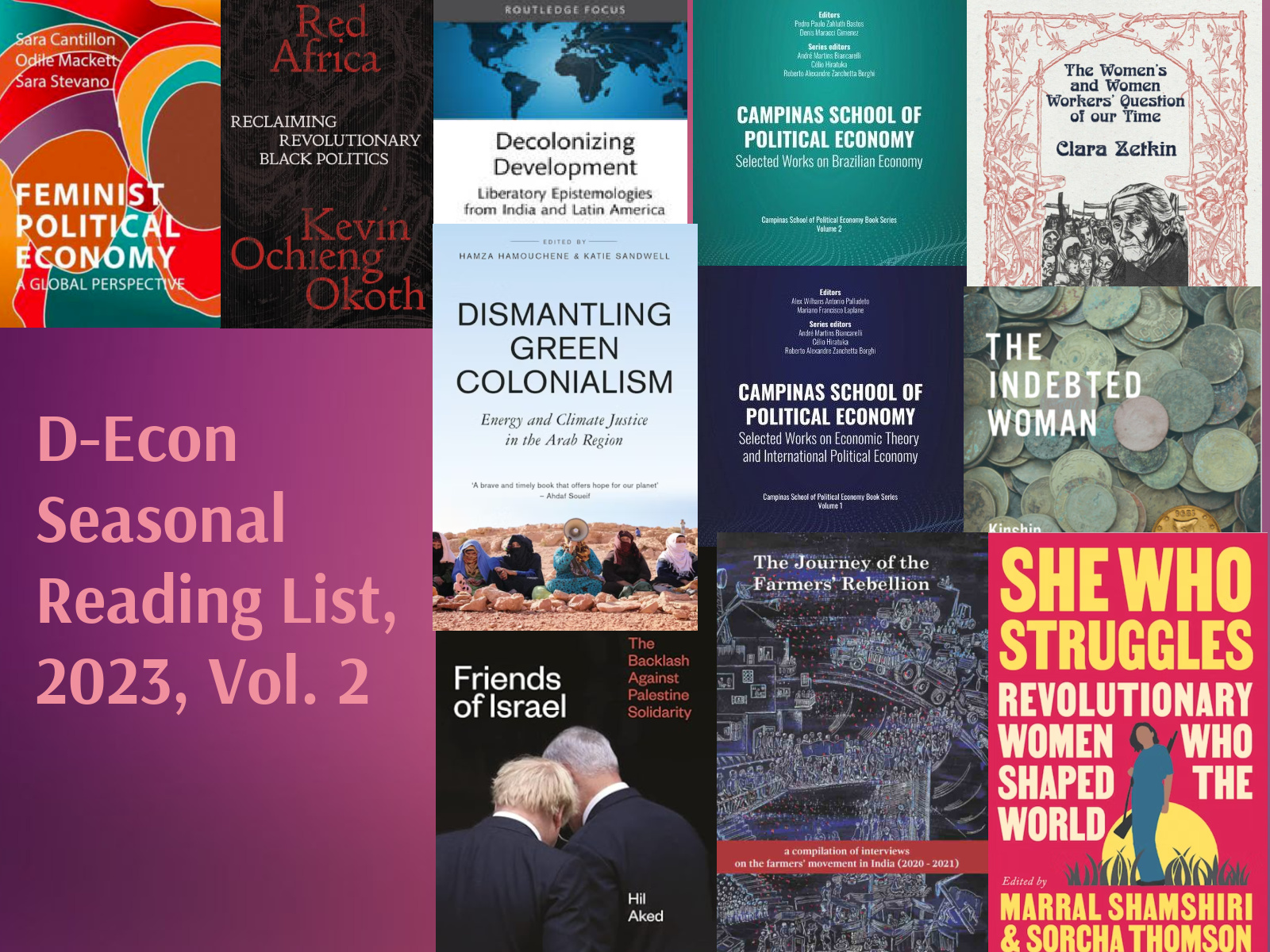
D-Econ’s Seasonal Alternative Reading List – 2023, pt. 2

As the year comes to an end, and we head into the holiday season, here’s D-Econ’s second reading list, which has our recommendations of books published in the latter part of 2023 (see part 1 here).  These include books you may have missed because of the identity of the author, or their geographical location, or because the topic is not typically considered interesting to those interested in reading about the economy. We include 11 books that cover a range of topics that we think provide a richer understanding of socioeconomic phenomena and are therefore crucial to understanding economics and the world.

Maybe it’s just us, but this year felt like one of those years which had several weeks in which decades happened, with intensifying indebtedness and genocide joining the ongoing climate catastrophe in a weird dystopic bacchanalia. Luckily, authors around the world have written books that can help us understand this convergence of crises, and serve as sources of hope and inspiration. It is no surprise then that we have many books on anti-imperial social, political, and economic movements. Specifically, we have been reading about the backlash against solidarity with the struggle of Palestinian liberation, revolutionary Black politics in Africa, a new translation of the work of legendary socialist Clara Zetkin, women engaged in “transformative, anti-colonial, anti-imperialist, and socialist projects” around the world, and a farmer’s rebellion in India. As economists, we firmly believe that it is impossible to understand the world and consequently the economy without learning from activists who respond to and help in shaping struggles for economic justice, and therefore, these books are a fundamental part of reading about economics.

However, in our heart of hearts, we are a group of nerds. Therefore, we also have been reading about often ignored economic theories and histories of thought. The relatively-more academic books that we include are accessible, and we hope that you can add them to your bookshelf (even if you don’t take them with you to beach or read them as light bedtime reading) and learn about feminist political economy, decolonizing development, and the history of economic thought from one of the foremost centres of economic knowledge in Brazil.

We hope you enjoy these books, and they energize you for the coming year. As always, please let us know if you have any suggestions for our next reading list. 

Continue reading

D-Econ’s Seasonal Alternative Reading List – 2023, pt. 1

As we are halfway through 2023 and many people across the world are heading off on holiday – or simply looking for new inspirations for readings – we are publishing our top choice of books from the first half of 2023 that you may have missed because of the identity of the author, or their geographical location, or because the topic is not typically considered interesting to those interested in reading about the economy. We include 11 books that cover a range of topics that we think provide a richer understanding of socioeconomic phenomena and are therefore crucial to understanding economics and the world.

We hope you find some time to read these brilliant books. If you’d like to read more, you can find our previous reading lists here. If you enjoy our reading lists, please let us know by emailing us at info@d-econ.org, and please feel free to send us suggestions of books we should read and include in our next reading list!

South-North Dialogues on Democracy, Development and Sustainability

By Cristina Fróes de Borja Reis, Tatiana Berringer (editors)

This book is highly innovative in its approach, as each chapter is written in the form of a dialogue between one scholar from a Brazilian institution and one scholar based either elsewhere in the Global South or in the Global North. These ‘South-North dialogues’ cover many contemporary debates, all with the aim of shedding light on how best to understand and combat global economic, political, and social inequalities. One of the key aims of the book is to move beyond Eurocentrism and to bring theorisation and thinking from the Global South to the forefront of economic and political thought. It does so by bringing in a range of heterodox economic thinkers and putting them in conversation with each other about themes such as democracy, sustainability, geopolitics, urban development, decoloniality, dependency, (de)industrialization, food systems, and racism. Buy the book here.

Zimbos Never Die? Negotiating Survival in a Challenged Economy, 1990s to 2015 

By Ushehwedu Kufakurinani, Eric Kushinga Makombe, Nathaniel Chimhete, and Pius Nyambara (editors)

Economic and financial crises in Zimbabwe have long enjoyed global attention, especially the crises of the 2000s that culminated in the second highest inflation rate globally for an economy not at war. However, what is less known is how Zimbabweans have dealt with these crises in different spheres of economic life. This book fills that gap by exploring how Zimbabwean society and its institutions have survived economic crises in the country, spanning from the 1990s to 2015. The chapters are characterized not only by clarity and depth on a topic that is only superficially understood by most people, but also by careful attention to historiography. Overall, the chapters address survival in informal spaces – such as displacements in Harare’s flea markets, street vendors, and small scale tobacco growers – as well as survival of state and non-state institutions – such as the public health service, social security provision, the army, the education sector, and the banking sector. Finally, it discusses how the crises have impacted patterns of migration and smuggling of humans and commodities. Buy the book here.

Everyday Politics in the Libyan Arab Jamahiriya

By Matteo Capasso

In this book, Matteo Capasso provides a counterargument to those who frame the history of Libya as a stateless, authoritarian, and rogue state by focusing on international and geopolitical dynamics that have impacted Libya’s governance. Capasso reconstructs the last two decades of the Libyan Arab Jamahiriya, leading up to the 2011 events that led to its fall. It carefully presents a collection of oral histories, including personal anecdotes, moods, popular jokes and rumors, in order to trace the ‘everyday’ as central for studying regional and international politics. As such, it gives powerful insights into the workings of power from below. Beyond the historical analysis, it also offers an important foundation for understanding the current state of violence, war, and hope in Libya. Buy the book here.

What Is Antiracism?: And Why It Means Anticapitalism

By Arun Kundnani

This book, written by Arun Kundnani – author, activist and scholar – raises and discusses two key questions: ‘What is “racial capitalism”?’ and ‘How do we overcome it?’ The book contrasts modern liberal anti-racism with radical anti-racism. Liberal anti-racism and its focus on individual attitudes, unconscious biases, celebration and understanding of cultural diversity tends to see racism as an extremist mindset. Radical anti-racism understands racism as a matter of power, resource distribution between different racial groups and the role state violence operates in to uphold these inequalities.. It argues that while liberal antiracism has contributed to the transformation which has happened over recent decades in terms of interpersonal exchanges, structural forces have not improved, but rather expanded. Liberal anti-racism methodology cannot enable the structural changes that are needed, but a radical anti-racism is needed. The book delves into how colonialism expresses itself in today’s world, and its direct relationship to capitalism and racism, illustrated with key moments in modern history. It further argues that the role of racism in the class issue is misread, and needs to be understood for a successful united movement. You can buy the book here.

India from Latin America Peripherisation, Statebuilding, and Demand-Led Growth

By Manuel Gonzalo

This book is written by economist Manuel Gonzalo who in addition to his many academic roles assesses the ‘Latin America – India’ relationship focusing on governments, firms, think tanks, and international organisations. The emerging trade partnership between India and Latin America has expanded over the last decades and is expected to grow rapidly in the near future. While much of Indian and Latin American trade is understood through a westernised lens, this book offers a Latin American perspective of India as an economy and trade nation. The author, with personal as well as professional experience, analyses India from three perspectives: Peripherisation, State Building and Demand-led growth. The book is contributing to a common research agenda for the economic development of the Global South.

Deadly and Slick: Sexual Modernity and the Making of Race

By Sita Balani

In Deadly and Slick, Sita Balani draws on the tradition of British cultural studies associated with Stuart Hall and the Birmingham Centre for Contemporary Cultural Studies. Balani highlights the intimate connection between techniques used to govern sex, domestic life and children – and techniques used to make, maintain and manage ‘race’ as both a set of social structures and a common sense understanding of bodily and social difference. This book draws on histories of sexual and racial governance in colonial India, as well as the racialisation of British Asians in the present. In contemporary Britain, the Conservative government’s support for gay marriage – and policy of aid conditionality for countries where British colonial laws opposing homosexuality were still on the statute books – cannot be understood independently from its embrace of austerity, the privatization of social welfare and a renewed emphasis on ‘family’ as the site of sole economic responsibility. By highlighting these ‘deadly and slick’ operations of power, Balani’s book is replete with reminders that ‘the economy’ cannot be understood independently of the entanglements of race and sexuality. 

Against Racial Capitalism: Selected Writings

Neville Alexander, edited by Salim Vally and Enver Motala

This volume collects the writings of Neville Alexander, a South African activist, educator, trade unionist and founder of the National Liberation Front, who spent many years imprisoned on Robben Island alongside Nelson Mandela and other anti-apartheid freedom fighters. In recent years, ‘racial capitalism’ has become much discussed within and without academia. Yet Neville Alexander’s contributions to theorizing and challenging ‘racial capitalism’ in South Africa have only recently started to garner wider attention. The editors of this volume have collected Alexander’s writing on education, language, and the national question in a post-apartheid South Africa, alongside his direct contributions to theorising ‘racial capitalism’. As they make clear, racism and capitalism were never merely “theoretical constructs requiring reconciliation” for Alexander. Rather, racial capitalism was seen as the material basis of a political economy, of socio-linguistic orders, and even as shaping the consciousness and strategies of the liberation movement itself.

 White Saviorism in International Development: Theories, Practises, and Lived Experiences

Edited by Themrise Khan, Kanakulya Dickson, and Maïka Sondarjee

In this new book, the authors argue that the colonial idea that the Global South is characterized by gaps and inferiorities, which is at the very foundation of the development field. As a result, much of the field is oriented towards White development practitioners trying to “save” racialized communities in the Global South while supporting the capitalist system that perpetuates their exploitation and dispossession. The authors argue that in many instances, not only is this not helpful, it is often actively harming communities in the Global South. The book gives several examples of scandals of violation of privacy and human rights, sexual violence, and bodily harm caused by Western development practitioners. But it goes further to argue that these aren’t standalone instances, but manifestations of a structural feature of the field in which White/Western people in development are seen as experts in all things, often measuring the political, socio-economic, and cultural processes in developing countries against a standard of Northern Whiteness. It is a provocative collection of contributions comprising academic work, practitioner-based approaches and personal stories of those who have experienced what the editors call White Saviorism in global development and is essential reading for anyone interested or involved in the field. 

Work and Alienation in the Platform Economy: Amazon and the Power of Organization

By Sarah Kassem

The world of work has been transformed by platforms like Google, Amazon, Uber, Netflix and many others, and it is very difficult to now avoid using these platforms in our daily lives as they have become an intrinsic part of our social fabric. In this book, Kassem explores the world of workers that power one of the largest platform economy firms, Amazon, and focuses her attention on its e-commerce platform and its digital labour platform MTurk. Notably, she takes the reader through a discussion of how workers organize and reshape the structure of the platform that seeks to atomize them from one another. Even though the structure of work alienates and individualizes the workforce, these platforms are sites for crucial labour struggle. This book is an important read to understand work in the 21st century, and how labour processes and struggles have and can shape the future of Artificial Intelligence.

Divided: Racism, Medicine and Why We Need to Decolonise Healthcare

Annabel Sowemimo

Annabel Sowemimo draws on her experience of medical education, and working as a Sexual and Reproductive Health clinician, in this examination of the persistent – and often unacknowledged – influence of race science on medicine. Sowemimo shows how racial inequalities underpin a health system that doesn’t work for Black patients. But she also traces the history of race science from 18th century Europe, making explicit that unequal health outcomes for Black people are shaped not only by ideas inherited from race science, but by a medical profession often unwilling to unlearn this inheritance. 

Decolonisation and Legal Knowledge – Reflections on Power and Possibility

Folúkẹ́ Adébísí

In this book Folúkẹ́ Adébísí examines how the foundations of law are intertwined in colonial thought and how it [re]produces ideas of commodification of bodies and space-time. Adébísí explores the implications of the law creating, maintaining and reproducing racialised hierarchies which then creates and preserves severe global disparities and injustices. This analysis discusses crucial themes that would be of interest to any social scientist seeking to engage beyond their disciplinary boundaries. With chapters such as: “(Un)Making the Wretched of the Earth and “Another University is Necessary to Take us towards Pluriversal Worlds”, this promises to be a read that both deconstructs, as well as encourages us to reconstruct. In Adébísí’s own words: “In response, the decolonisation movement, gives us an option for imagining together, new ways of thinking, being and doing in the world, to avert global injustice, deprivation and climate disaster.” This book is a vital contribution to anyone who views these ideas as central to our research, teaching and practice.

This list was compiled by Alexandra Arnsten, Devika Dutt, Paul Gilbert, Michelle Groenewald, and Ingrid Harvold Kvangraven.

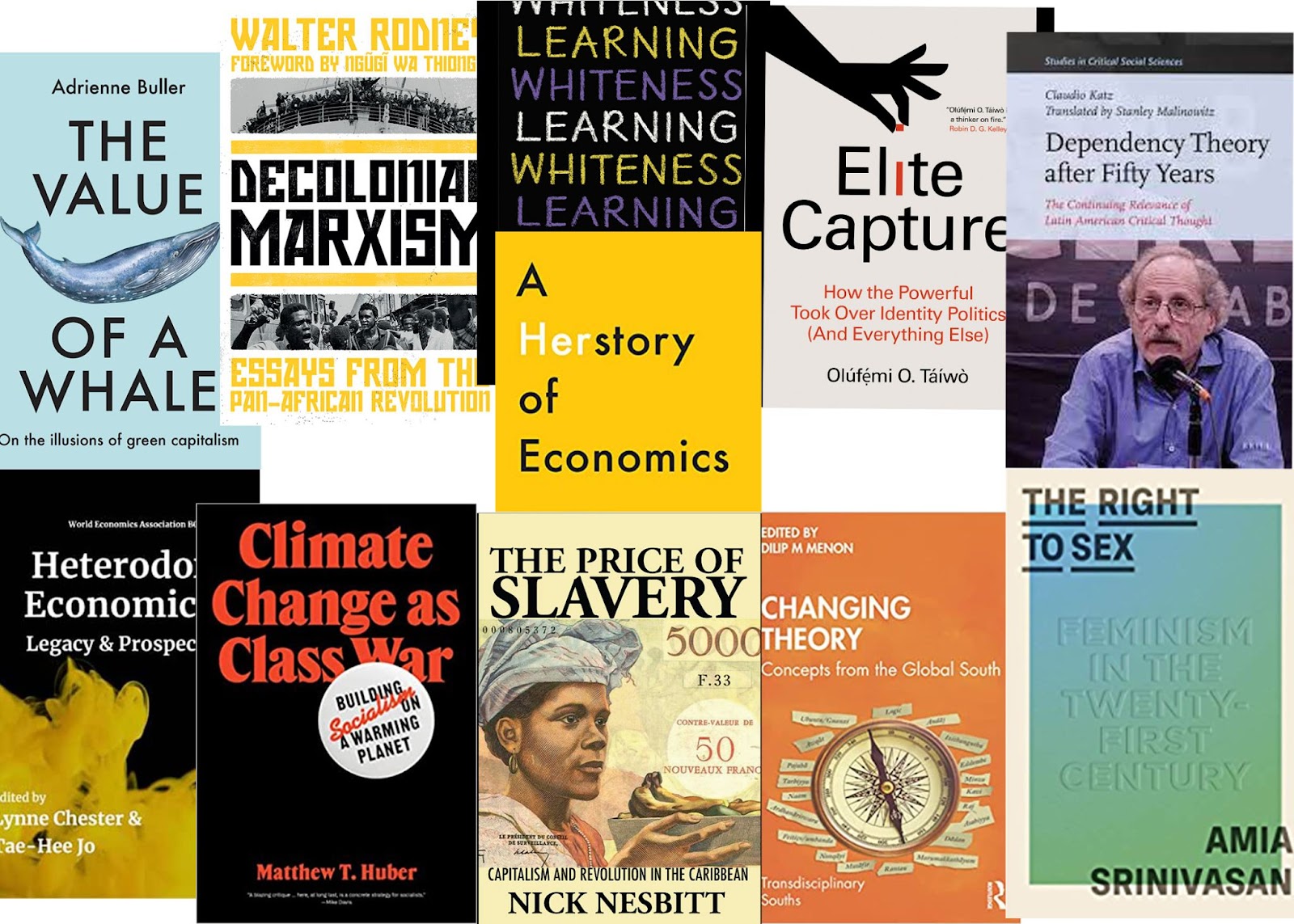
D-Econ’s Seasonal Alternative Reading List 2022- Part II

2022 is coming to a close and to send it off in style we are back with our second reading list of 2022, which has our recommendations of books published in 2022. These include books you may have missed because of the identity of the author, or their geographical location, or because the topic is not typically considered interesting to those interested in reading about the economy. We include 11 books that cover a range of topics that we think provide a richer understanding of socioeconomic phenomena and are therefore crucial to understanding economics and the world.

This time we include two books on understanding the ecological crisis facing the world: one that exposes the class conflict at the heart of the climate catastrophe, and one that questions whether green capitalism is capable of creating a habitable future for us all. This year, we also read books on how structural racism is reified through education, and how anti-racist and other progressive social movements are undermined by elite capture. Among the great new books this year, we found two books that engaged with Marxist analyses of racial capitalism and slavery, especially in the work of critical Black scholars from the Global South. As always, we cannot help but read about the economics discipline, and especially about the scholars and ideas that the field tends to ignore. This time, we read about the women in the history of economic thought that have been overlooked, about the importance of the vibrant discipline of heterodox economics, and about how Dependency theory has evolved over the past half century. We round out the list with a new volume on post-colonial social theory and a fascinating new book that looks at sex as a political phenomenon. 

We hope you find some time to read these brilliant books. If you’d like to read more, you can find our previous reading lists here. If you enjoy our reading lists, please let us know by emailing us at info@d-econ.org, and please feel free to send us suggestions of books we should read and include in our next reading list!

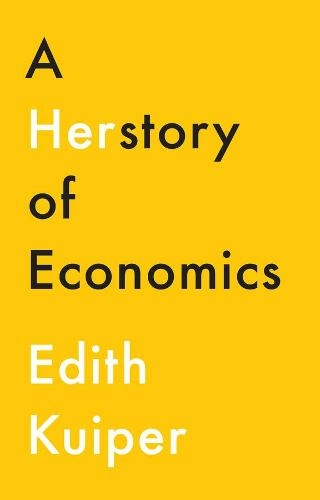
A HERSTORY OF ECONOMICS

By Edith Kuiper

Where are the women in the history of economics? In this exciting volume, Edith Kuiper (a feminist historian of economics) uncovers the contributions of many forgotten women in the history of the discipline, showing that the contributions of women go beyond Joan Robinson and Rosa Luxemburg. By transforming the field of history into herstory, Kuiper describes how women economists have contributed to the making and discussion of economics, ranging from production, work, and the economics of the household, to income and wealth distribution, consumption, education, public policy, and much more. Kuiper elegantly shows how many important theories and concepts were left aside from the early formation of classical political economy until the end of the 20th century, providing a thematic summary of these contributions. It is a must read for those interested in economics from a different perspective, putting many unknown and forgotten names under the spotlight in a notably male-dominated discipline.

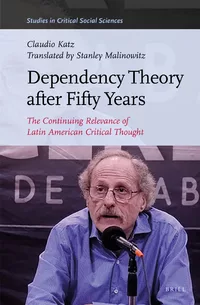
DEPENDENCY THEORY AFTER FIFTY YEARS

Claudio Katz (translated by Stanley Malinowitz)

How has Dependency Theory evolved and transformed itself since the 1950s? How can it offer relevant insights for economists, politicians and the public debate today? In this volume, Katz offers a detailed summary of the foundations, evolutions and approaches of Dependency Theory in Latin America, focusing on the regional interpretations of Marxism, Developmentalism and World-Systems Theory. By touching upon structural issues of colonialism, imperialism, hegemony, power, and dominance, Katz eloquently connects Dependency Theory to the most up to date social issues that Latin America faces, as well as the challenges to overcome its permanently dependent condition under a trap of “subimperialism”. It is a must read for those interested in the contemporary economic and political reality of Latin America and the debates surrounding underdevelopment of peripheral countries. 

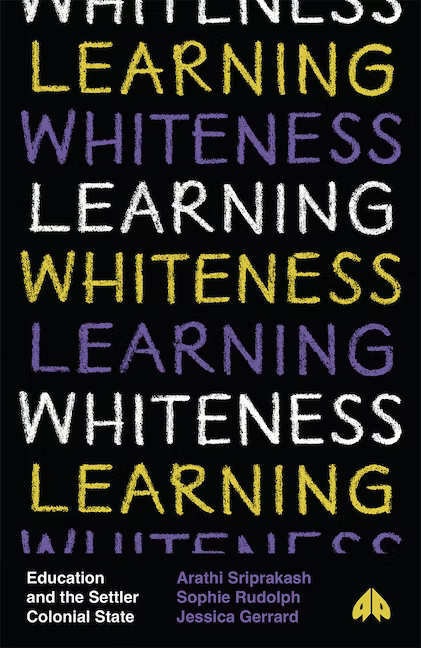
LEARNING WHITENESS: EDUCATION AND THE SETTLER COLONIAL STATE

By Arathi Sriprakash, Sophie Rudolph and Jessica Gerrard

Whiteness is a process of learning: one is not born white, but becomes one. In this rich and compelling volume, Sriprakash, Rudolph and Gerrard offer a meticulous (and eye-opening) reading of educational experiences and structures that endorse systemic racism. They examine the material conditions, knowledge politics and complex feelings that create and relay systems of racial domination, exploring how the structural formations of racial domination tied to European colonialism continue to be reinscribed across all aspects of social life, but particularly in education – which reinforces structural racism and social inequalities. The volume describes the example of Australia, using it to demonstrate how Australian education offered a grounded account of the workings of British settler colonialism as a globally enduring project. Further, they also summarise many educational practices of how one “learns whiteness” through materialities, knowledges, and feelings as a process of capturing and normalising identities. An impressive book for those interested in further deepening their knowledge about the role of education in perpetuating racism.

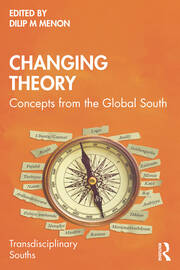
CHANGING THEORY: CONCEPTS FROM THE GLOBAL SOUTH

Edited by Dilip M Menon

This edited volume offers an impressive array of essays aiming to profoundly change the Euro-American episteme of postcolonial theory and the politics of Western academy. It discusses eight main themes (relation; commensuration; the political; the social; language; rooted words; indeterminacy; insurrection) to drastically change social theory from the ground up, putting the theories and frameworks that emerged from the Global South as the main point of departure. Rather than arguing for a geographical South, it discusses the emergence of an “epistemological South”, and how it has been marginalised under centuries of exclusion. By arguing that colonialism and modernity has made us suffer from “intellectual amnesia” from regional knowledge/practices, the volume presents concepts from Asia, Africa, the Caribbean, the Arab World, and Latin America to reorient how social theory is (and should be) made. By putting a rich collection of chapters at the availability of the reader, this volume is a must read for social scientists, educationalists, developmentalists, economists, and the general public interested in finding out more about the variety of regional theories and interpretations about modes of living.

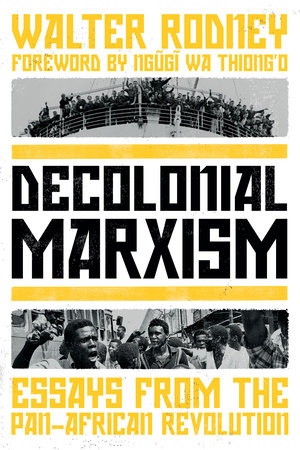
DECOLONIAL MARXISM: ESSAYS FROM THE PAN-AFRICAN REVOLUTION

By Walter Rodney

This is a fascinating collection of previously unpublished essays on Marxism by Walter Rodney. While the race-class nexus is a unifying theme of the essays, the range of questions and issues he delves into is incredibly broad, including Black Power, Ujamaa villages, forms of resistance to colonialism, radical pedagogy, programs for the newly independent states, anti-colonial historiography, and balance sheets for wars for national liberation. Interestingly, the book also demonstrates the way he explored and reinvented Marxism in light of struggles for economic independence across the globe. This is particularly relevant given the 50th anniversary of Rodney’s classic How Europe Underdeveloped Africa this year. 

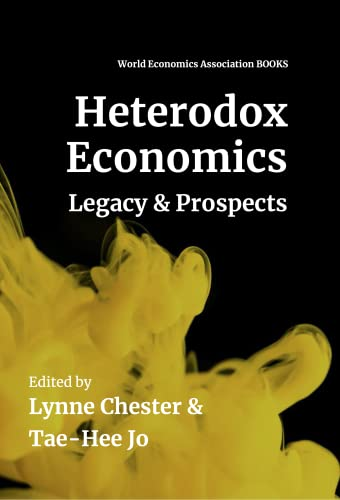
HETERODOX ECONOMICS: LEGACY AND PROSPECTS 

By Lynne Chester and Tae-Hee Jo (editors)

This is an important contribution that defends the importance of heterodox economics. It discusses what constitutes heterodox economics as an intellectual, social, and political project, with a range of contributions from leading heterodox thinkers coming from a diversity of theoretical vantage points. Some of the key identifying aspects of heterodox economics that are identified are its  interdisciplinarity, openness, relevance for understanding the real world, pluralism, and social concerns. The purpose of the edited collection is to provide a constructive account of the future of heterodox economics, and it does so in a way that will be intriguing for many readers, including those less familiar with heterodox economics.

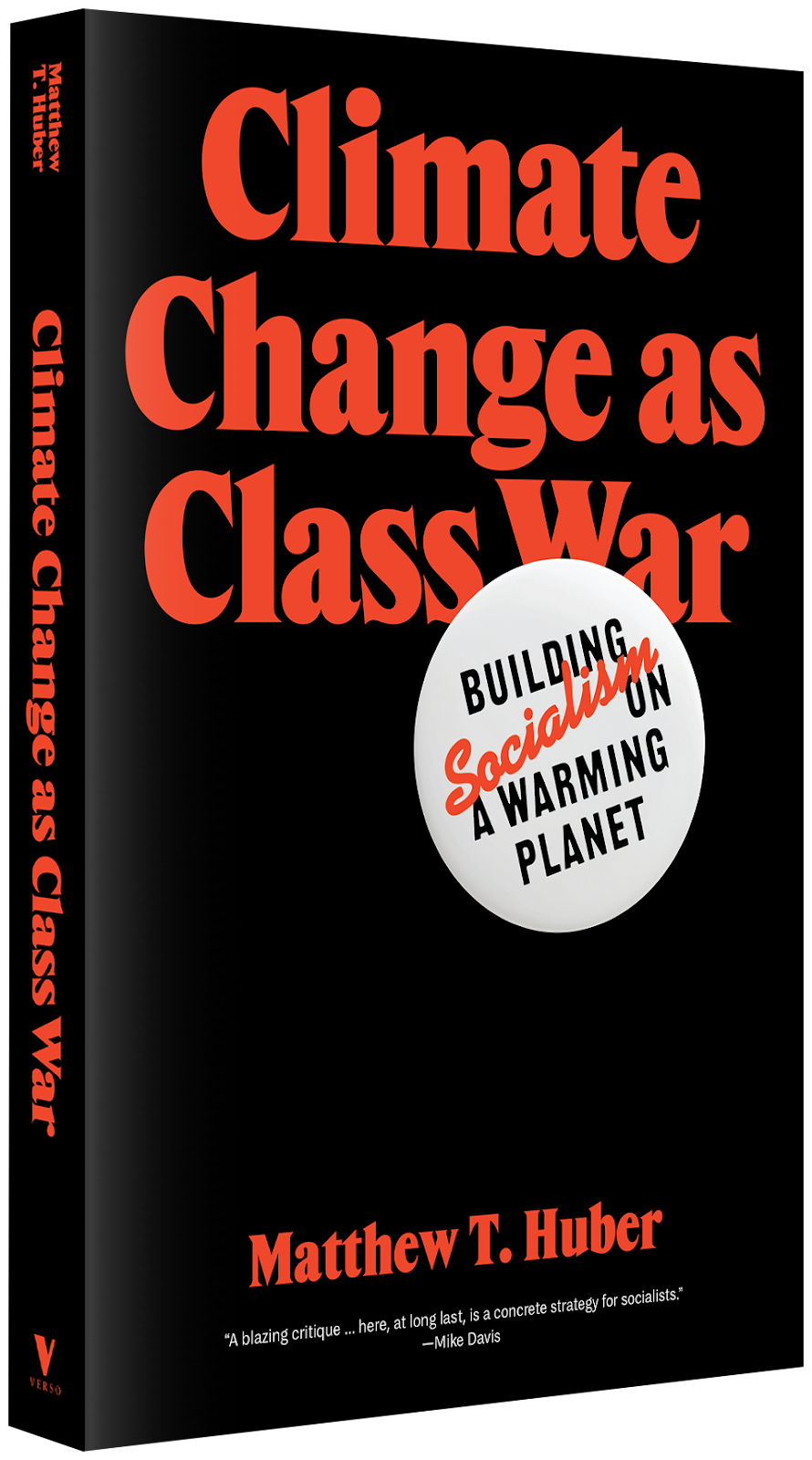
CLIMATE CHANGE AS CLASS WAR: BUILDING SOCIALISM ON A WARMING PLANET

By Matthew T. Huber

This is a crucial book at this moment of climate breakdown. Although there are many important books on class out there, there are not that many that integrate issues of climate change with class analysis. Huber’s book is therefore an incredibly important addition to scholarship on climate change thus far. He argues that while the carbon-intensive capitalist class must be confronted with its disproportionate effect on the climate, the contemporary climate movement – which is largely rooted in the professional class – has remained incapable of meeting this challenge. The alternative Huber proposes is a climate politics to appeal to the majority – the working class. His proposal includes building union power and transforming the energy system. Finally, and crucially, he underlines the importance of an internationalist approach based on planetary working-class solidarity. 

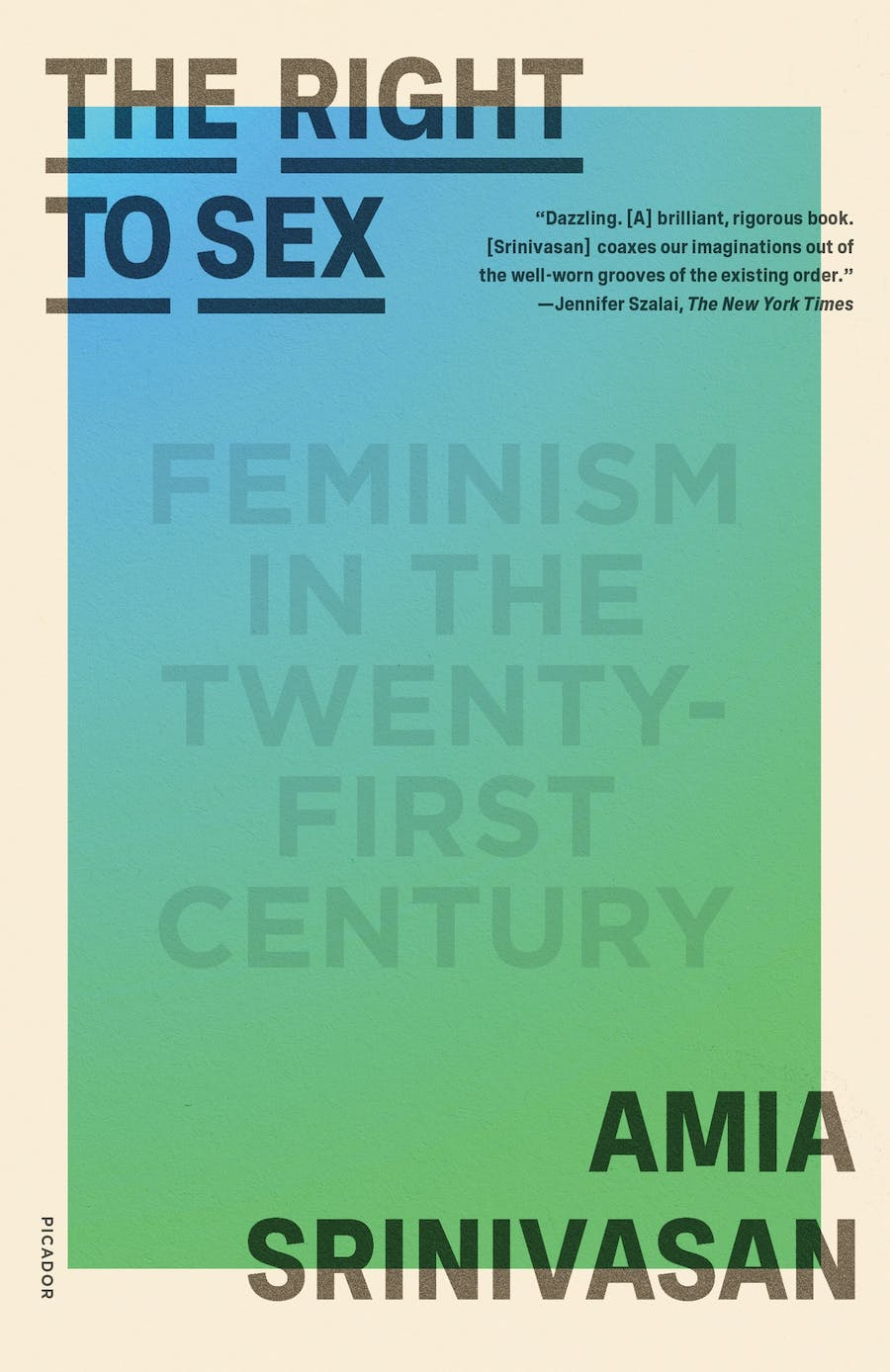
THE RIGHT TO SEX: FEMINISM IN THE TWENTY-FIRST CENTURY

By Amia Srinivasan

Amia Srinivasan’s new book is of crucial importance to economists and non-economists alike, and is especially relevant in the wake of the focus on consent that has pervaded public discussions after the #MeToo movement. It traces the meaning of sex in our world, animated by the hope of a different world. She reaches back into an older feminist tradition that was unafraid to think of sex as a political phenomenon. She discusses a range of fraught relationships—between discrimination and preference, pornography and freedom, rape and racial injustice, punishment and accountability, students and teachers, pleasure and power, capitalism and liberation. To grasp sex in all its complexity, including its relationship to gender, class, race and power, Srinivasan argues that we need to move beyond the simplistic views of consent in the form of yes-no, to rather consider the more complex question of wanted-unwanted.

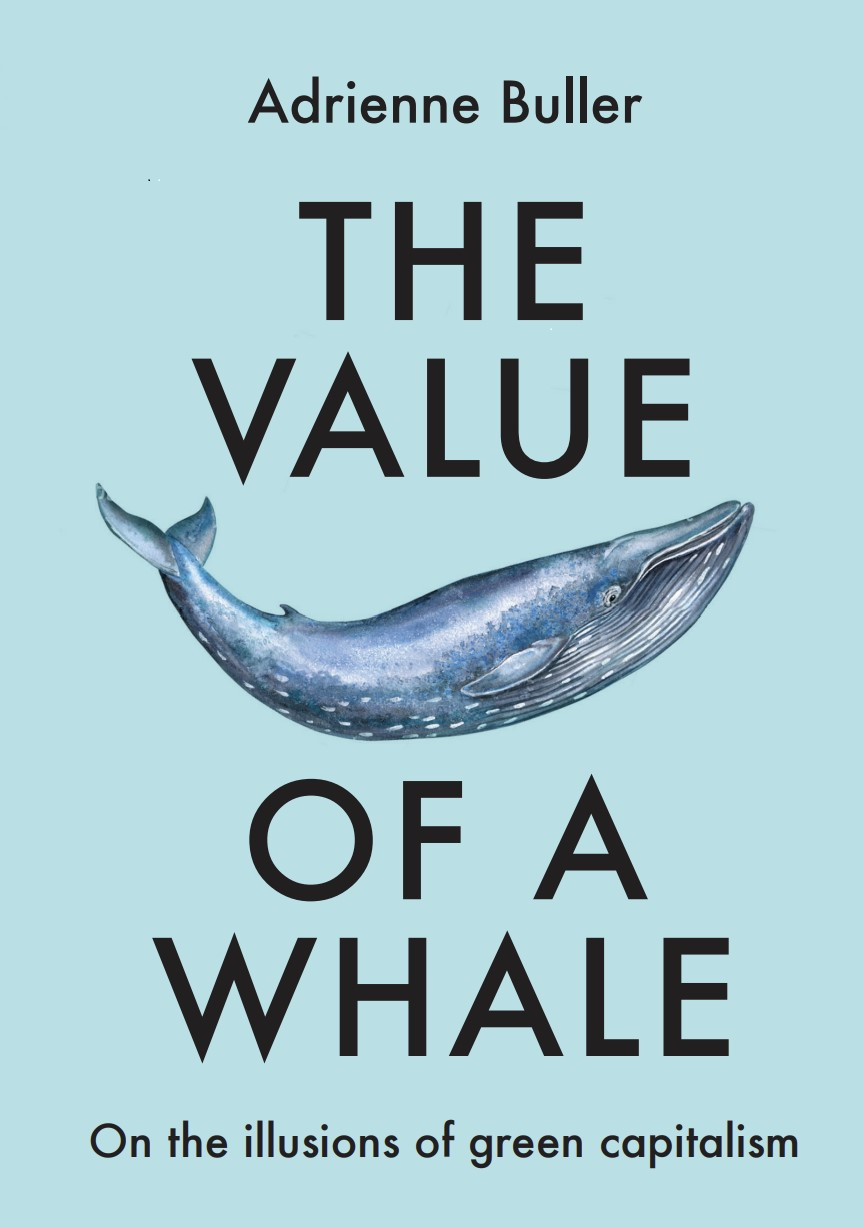
THE VALUE OF A WHALE: ON THE ILLUSIONS OF GREEN CAPITALISM

By Adrienne Buller

Limiting global temperature increases to 1.5 degree celsius is the defining challenge of our time. To this end, economic actors have found ways to monetise and trade “ecosystem services”. The idea is that by creating a market in biodiversity and carbon offsets can create investment to prevent the unfolding environmental and climate catastrophe. In part, these efforts show how the Overton window has shifted from outright climate denialism to grappling directly with the realities of environmental degradation. Despite unprecedented levels of public knowledge and concern, commitment from governments, technical innovation, and the staggering impact of climate change and environmental damage on our lives, why are we still so far from a “habitable future and safe present?” In this great new book, Adrienne Buller poses these important questions about green capitalism, the effort to preserve existing capitalist systems and relations and ensure new domains for accumulation in order to respond to the ecological crisis. She argues that the dominance of the approach of green capitalism is self-defeating, and needlessly confines the shape of the society we need to build. Specifically, as regards the role of neo-classical economics and market governance in shaping green capitalism, this book is a must-read. 

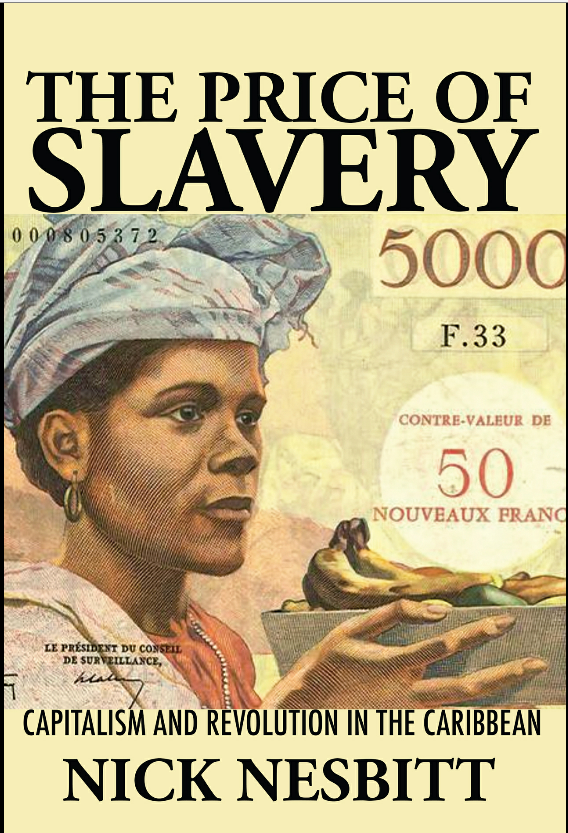
THE PRICE OF SLAVERY: CAPITALISM AND REVOLUTION IN THE CARIBBEAN

By Nick Nesbitt

What is the role played by slavery in the development of capitalism? Nick Nesbitt revisits this question by examining Marx’s analysis of slavery across his seminal Capital. In addition, he outlines the writings of key figures in what he calls the Black Jacobin Marxist critical tradition, such as Toussaint Louverture, Henry Christophe, C.L.R. James, Aime Cesaire, Jacques Stephen Alexis, and Suzanne Cesaire, and argues that the critique of slavery, colonialism, and capitalism can be understood in terms of Marx’s social forms. He argues that even though slave-based production was crucial for the development of capitalism, in the Marxist sense, slavery was an unproductive system, that is, it does not contribute surplus value to the process of accumulation. Nonetheless, production by slave labor captures massive average profits for production even if they do not produce surplus value. He also takes the reader through the Black Jacobin thought on revolutionary overthrow of slavery, Antillean plantation slavery and competing social forms, and critiques of colonial forms of labor and the state. Nesbitt produces a theoretical articulation of slavery and capitalism that is illuminating and worth a read. 

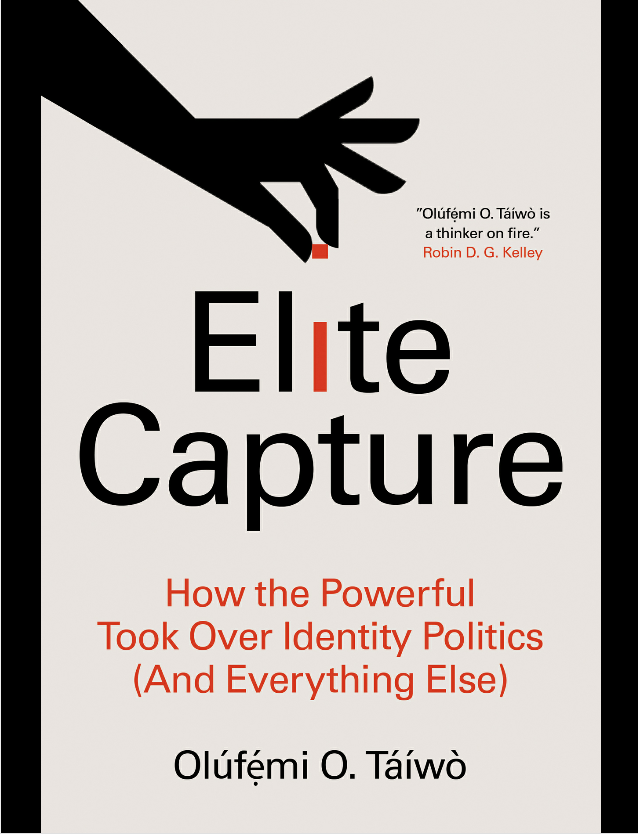
ELITE CAPTURE: HOW THE POWERFUL TOOK OVER IDENTITY POLITICS (AND EVERYTHING ELSE)

By Olúfẹ́mi O. Táíwò

In this important and powerful book, Taiwo argues how important political movements are captured and derailed by elite interests, specifically by weaponizing identity politics. Identity politics, he argues, has equipped people, organizations, and institutions with a new vocabulary to describe their politics and aesthetics, even if the substance of those political decisions are irrelevant or counter to the interests of the marginalized people whose identity is used. However, this is not a failing of identity politics per se, but rather how it is used. Elite capture helps explain how political projects are hijacked and by those that are well positioned and well resourced, and how knowledge, attention, and values become distorted and distributed by power structures. He argues that movements need to build constructive politics that focuses on outcome over process rather than mere avoidance of complicity in injustice. It is a thought provoking book for everyone interested in the dynamics of contemporary political movements, and how effective political movements can be built.

This list was compiled by Devika Dutt, Danielle Guizzo, and Ingrid Kvangraven.

D-Econ’s Seasonal Alternative Reading List – 2022

It’s time for Summer/Winter Holidays and we are back with our first reading list of 2022 which has our recommendations of books published in 2022, which you may have missed because of the identity of the author, or their geographical location, or because the topic is not typically considered interesting to those interested in reading about the economy. We include 10 books that cover a range of topics that we think provide a richer understanding of socioeconomic phenomena and are therefore crucial to understanding economics and the world. 

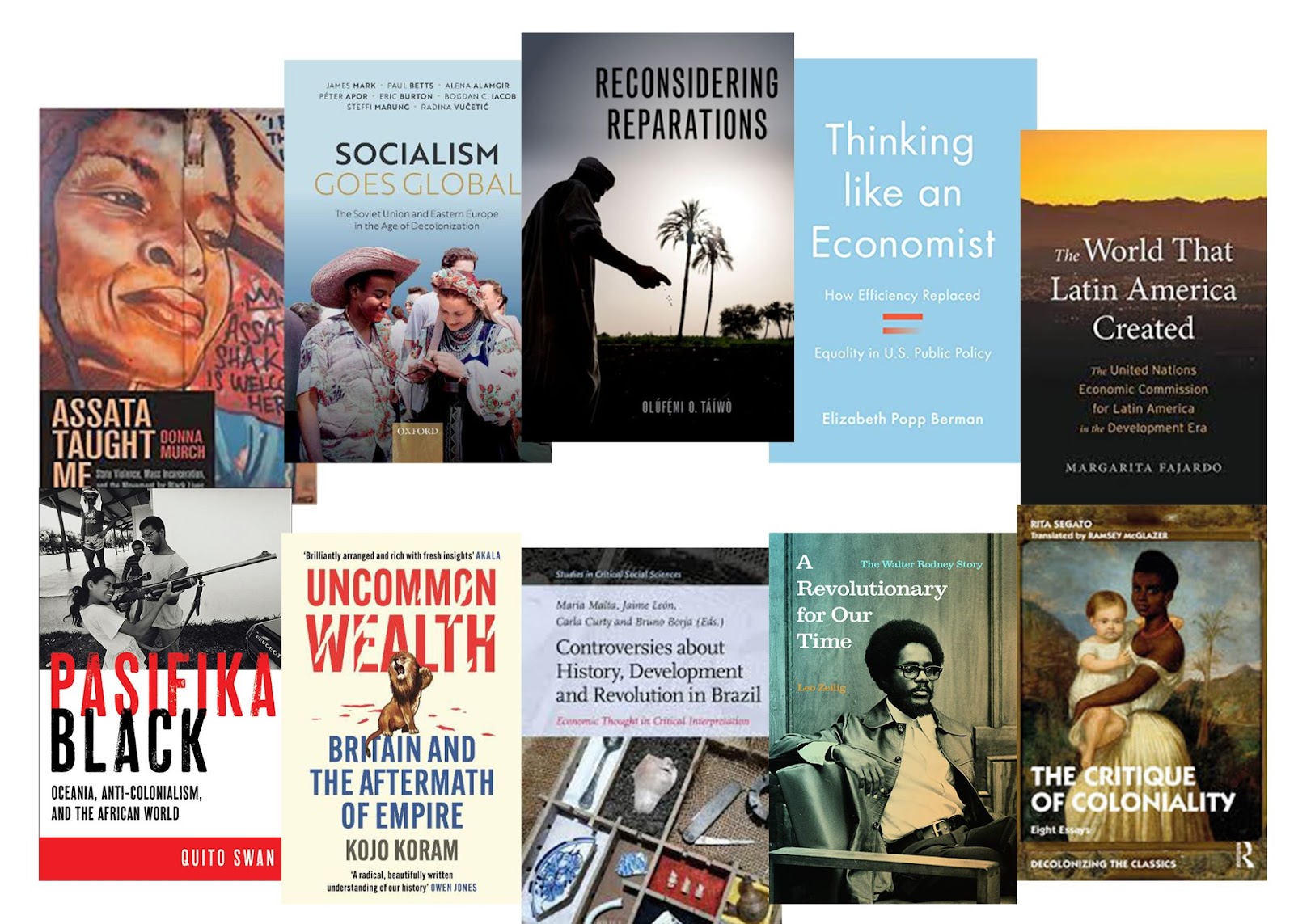
We include a new English translation of a book of essays on coloniality and power, and the persistence of colonial structures and institutions, specifically in the Latin American context. We also include the story of the intellectual history of theories of development in Latin America in general and its connection to the story of the United Nations Economic Commission on Latin America or CEPAL, and economic thought in Brazil. The evolution of economic thought and the influence of economists and economics on policymaking in the United States is the subject of another of our recommendations.

There are some great new books that deal with the history, political economy, and consequences of colonialism and imperialism from different lenses. We recommend a new compelling case for reparations as constructive justice, an account of how the British Empire dealt with/ continues to deal with its former colonies as independent nations, and a biography of one of the leading theorists of empire of the 20th century. We also recommend a new book about lesser known, and somewhat understudied, anti-colonial movements in Oceania. Given the ongoing war in Ukraine, we include in our list a timely new book that considers the relationship of Eastern Europe with decolonization. 

We hope you find some time to read these brilliant books. If you’d like to read more, you can find our previous reading lists here. If you enjoy our reading lists, please let us know by emailing us at info@d-econ.org, and please feel free to send us suggestions of books we should read and include in our next reading list!

Continue reading

D-ECON’S 2021 ALTERNATIVE READING LIST, PT. 2

We’re back once again with some recommended reading going into 2022. Due to the identity of the author or their location or the subject of their book, you may have missed these great books in 2021. We include 9 books that cover a range of topics that we think provide a richer understanding of socioeconomic phenomena and are therefore crucial to understanding economics and the world. 

We include two new and important books on social theory in the African context and the colonial origins of social theory and how modern social social theory can be reconstructed. In addition, with the resurgence of scholarship on dependency theories, it is only fitting that we include an examination of the possibilities of development and its limits in Latin America. The policy response of the COVID-19 pandemic has been extremely uneven across the world, partly because of the constrained policy space available to governments in developing countries. Therefore, we have included a new volume that examines the potential for economic and monetary sovereignty in African countries. The recovery from the pandemic induced recession in some advanced industrialized nations has shifted the balance of class power to a certain extent towards the working class. Therefore, revisiting debates of automation and labor power is timely, which you can do with our reading list. 

The pandemic also revealed that public health crises do not affect us all in the same way: some groups are more vulnerable than others within nations and globally. Therefore, we include books on de facto internal borders that often divide groups of people, such as segregation in New York City and resistance to it. We also include a book on national or external borders as functions of imperial domination and culmination of crises of capitalism, assuming greater relevance given the arbitrary restrictions placed on a bid to stop the global movement of people due to the pandemic. 

We hope you find some time to read these brilliant books. If you’d like to read more, you can find the books we selected for the first half of 2021 here. If you enjoy our reading lists, please let us know by emailing us at info@d-econ.org, and please feel free to send us suggestions of books we should read and include in our next reading list!

Dependent Capitalisms in Contemporary Latin America and Europe

By Aldo Madariaga and Stefano Palestini

This edited volume explores how dependency theories can be adapted and applied to understand limits and possibilities for development in Latin America and Europe. It explores core-periphery relations across different sets of countries, specific mechanisms of dependency, as well as the role of race and gender in dependency analysis. Beyond its theoretical explorations and elaborations, it also empirically unpacks a range of “new” situations of dependency in Latin America, Europe and beyond, and how they relate to contemporary concerns such as commodity booms, populism, neo-extractivism, growth, and financialization. This is a timely contribution at a moment when the use of dependency theories in analyses of economic development is being revived across the world. 

Colonialism and Modern Social Theory

By Gurminder Bhambra and John Holmwood

This is an immensely important book for any student of social theory interested in understanding the colonial roots of a lot of contemporary thinking. From a post-colonial perspective, Gurminder Bhambra and John Holmwood unpack how the emergence of modern society in the context of European colonialism and empire impacted the development of modern social theory. They find that colonialism and empire are to a large extent absent from the conceptual understandings of modern society in classics such as Tocqueville, Marx, Weber, Durkheim, and Du Bois, and that their ideas instead tend to be organized around ideas of the nation state and capitalist economy. Ultimately, the book argues for a reconstruction of social theory by taking the limitations addressed into account. Listen to the authors discuss the book on the Connected Sociologies Podcast here.

Economic and Monetary Sovereignty in 21st Century Africa

By Maha Ben Gadha, Fadhel Kaboub, Kai Koddenbrock, Ines Mahmoud and Ndongo Samba Sylla

This is an important contribution both to advancing theoretical and empirical understandings of African monetary sovereignty and to putting problems and possibilities relating to African monetary sovereignty on the political agenda. This is of utmost importance, given that these issues have largely not received much attention in contemporary discussions of economic development. Economic and Monetary Sovereignty in 21st Century Africa traces the recent history of African monetary and financial dependencies, looking at the ways African countries are resisting colonial legacies. The collection of chapters is diverse and highly interesting, offering comparative and historical analyses of how African countries have attempted to increase their policy space and move beyond various forms of monetary dependence. The collection is based on a conference in Tunisia in 2019 (watch the videos from the conference here).

The Harlem Uprising Segregation and Inequality in Postwar New York City

By Christopher Hayes

In this interesting take, the author, Christopher Hayes, explores the reasons for uprisings in the African American neighborhoods in New York City post the second world war in the 1960s. He ascribes these uprising to racial inequalities in various economic opportunities, including housing, schools, jobs, and policing. In this gripping and detailed account, the book explores how those in power have refused to address structural racism, while also examining the limits of liberalism.

Rethinking Development: Marxist Perspectives

By Ronaldo Munck

The book critically engages with various Marxian perspectives on the dynamics on development and social progress.  It specifically engages with some key words in Marxian theory, including Marx’s early work on capitalist development and his later works on underdeveloped Russia, Lenin’s thesis on imperialism as a hurdle for development, and Luxemburg’s contribution to analyzing imperialism as being functional to the needs of capitalism. The author then examines the Latin American dependency school of thought, post-development school and the indgenous development models advanced by Andean Marxism that have enriched the Marxian perspectives on development (and underdevelopment). The book ends with a discussion on the Marxian understandings of the pattern of uneven and combined development and the contradictions that riddle the process of economic development in the current phase of globalized capitalism.

Smart Machines and Service Work: Automation in an Age of Stagnation

By Jason E. Smith

In this new book, Smith returns to Solow’s classic “productivity paradox”, which essentially states that we can see automation everywhere, like the spheres of leisure, sociality, and politics, but not in the productivity statistics. He examines why labor saving automation in the service age in the Global North has not been accompanied by increased productivity, as was predicted. The book convincingly argues that the reasons for this are threefold: that many of the jobs now being automated require an intuitive, embodied, and socially mediated form of knowledge that even the most advanced machine learning algorithms cannot learn; that in the advanced capitalist world, cheap labor is surfeit which has all but removed the incentive for firms to invest their capital in soon-to-be-obsolete machinery to replace them; and that there is a crisis of profitability rooted in the decades-long expansion of “unproductive” labor, that is, labor engaged in supervisory or circulatory activities. It is a great book that critically analyzes potential automation of service work in the world of COVID-19 where frontline workers are sought to be replaced by machines for the safety of the workforce, or where increasing labor militancy is often threatened with automation. 

Social Policy in the African Context 

By Jimi Adesina

African Books Collective: Social Policy in the African Context

This edited volume, put together by Jimi Adesina, based on the proceedings of the Social Policy in African Conference in 2017 provides an overview of social policy in varied country contexts and fields especially in light of decades of the reduction in size and hollowing out of the content of social policy due to the neoliberal retreat of the State. It covers a wide range of topics from agrarian reform and cash transfers to gender dynamics of social policy and mutual support institutions and relates them to structures of production and economic policy as well. The book identifies the importance of deliberative social policy for the continued process of decolonization of African institutions and building state capacity and is a tour de force in critical social policy scholarship. 

Border and Rule: Global Migration, Capitalism, and the Rise of Racist Nationalism

By Harsha Walia

Framing borders as an instrument of capital accumulation, imperial domination, and labor control, Walia argues that what is often described as a “migrant crisis” in Western nations is the outcome for the actual crisis of capitalism, conquest, and climate change.  This book shows the displacement of workers in the global south due to, in many cases, the implementation of structural adjustment policies. Walia argues that borders are managed through exclusion, diffusion, commodified inclusion, and discursive control, which also hinders labor solidarity, by creating additional precarity among and differentiation from migrant workers. The book builds up to argue for a bold no border policy as well as the dismantling of the “political ideology of liberalism, the economic dogma of neoliberalism, and right-wing nationalism” that are built into and facilitated by borders.  

Born in Blackness: Africa, Africans, and the Making of the Modern World, 1471 to the Second World War

By Howard W. French

Amazon.com: Born in Blackness: Africa, Africans, and the Making of the Modern  World, 1471 to the Second World War eBook : French, Howard W.: Kindle Store

In this ambitious and impressive new book, journalist Howard French seeks to excavate the long elided central importance of the African continent as the “linchpin of the machine of modernity.” In the story of modernity, he writes, the role of Africa is diminished, trivialized, and erased, and by filling in some gaps in this story, he retells the story of modernity. He argues that the role of European nations in bringing about enlightenment and modernity is misplaced and this did not happen because of innate European superiority. Instead, he shows, the political economy of the European plunder of African and Caribbean nations set the stage for propelling the continent of Europe past great civilizational centers at the time. was not bea, and that much of its success in doing so is deeply connected with the extraction of gold and slaves from Western Africa. French also argues that this long economic and political assault on Africa has also been one of a war on Black people that has continued at least until the 1960s in the United States. This book does not pretend to have rewritten history, but seeks to start the process of correcting the most egregious form of erasure of the importance of Africa in this story, which he argues is in the minds of people in the rich world. 

This list was compiled for D-Econ by Aditi Dixit, Devika Dutt, Surbhi Kesar and Ingrid H. Kvangraven.

D-Econ’s 2021 Alternative Reading List, pt. 1

It’s time for D-Econ’s alternative reading list. We have picked 11 books that we believe are of particular importance to provide an alternative and richer understanding of the socioeconomic world we live in, that what the mainstream media provides. We include books that we hope not only present a wider selection of books in terms of who writes them, but also in terms of the topic and/or perspective. As you can see from the list, we consider economics to be about more than just money and finance, to also be about race, imperialism, and climate justice.  

Reflecting the ongoing conversation about structural racism, which became a global one after the murder of George Floyd last year, it is only fitting that we include reflections on how this time the resurgent Black Lives Matters movement is different. We situate this in a historical context by including an exploration of the histories of racial capitalism. Any discussion of structural racism is incomplete without a discussion of imperialism and colonialism, and therefore we cannot leave out new books that analyze how capitalism and imperialism have and continue to shape the world. 

The ongoing COVID-19 pandemic is not only a public health crisis that has exposed fissures in the global health system but is also creating related crises of rising private and public debt and homelessness in many countries. Therefore, we include books that looks at these related crises from a decolonial and feminist lens, which we find quite refreshing and insightful. 

Continue reading

An Alternative Economics Summer Reading List, 2019

pasted image 0This summer, we take stock of the most interesting economics-related books that have been released over the past year. Every year, Martin Wolf of the Financial Times makes a similar list. However, by his own admission, he only reads within the tradition of his own training in mainstream economics. While his 2019 summer list includes several excellent books, such as The Case for People’s Quantitative Easing by Frances Coppola and The Sex Factor by Victoria Bateman, we are still struck by the strong white-male-mainstream-Western bias in Wolf’s list, with the books almost all written by white (20/21) men (18/21) about topics mostly focused on the US and Europe. 

To complement Wolf’s list, we have put together an Alternative Economics Summer Reading list with authors from across the world, with more varied backgrounds – and writing about more wide-ranging topics, and from a wider variety of critical perspectives. Our alternative list also reflects our belief that issues such as structural racism, imperialism, ideology and the philosophy of science are central to understanding economics.  Continue reading