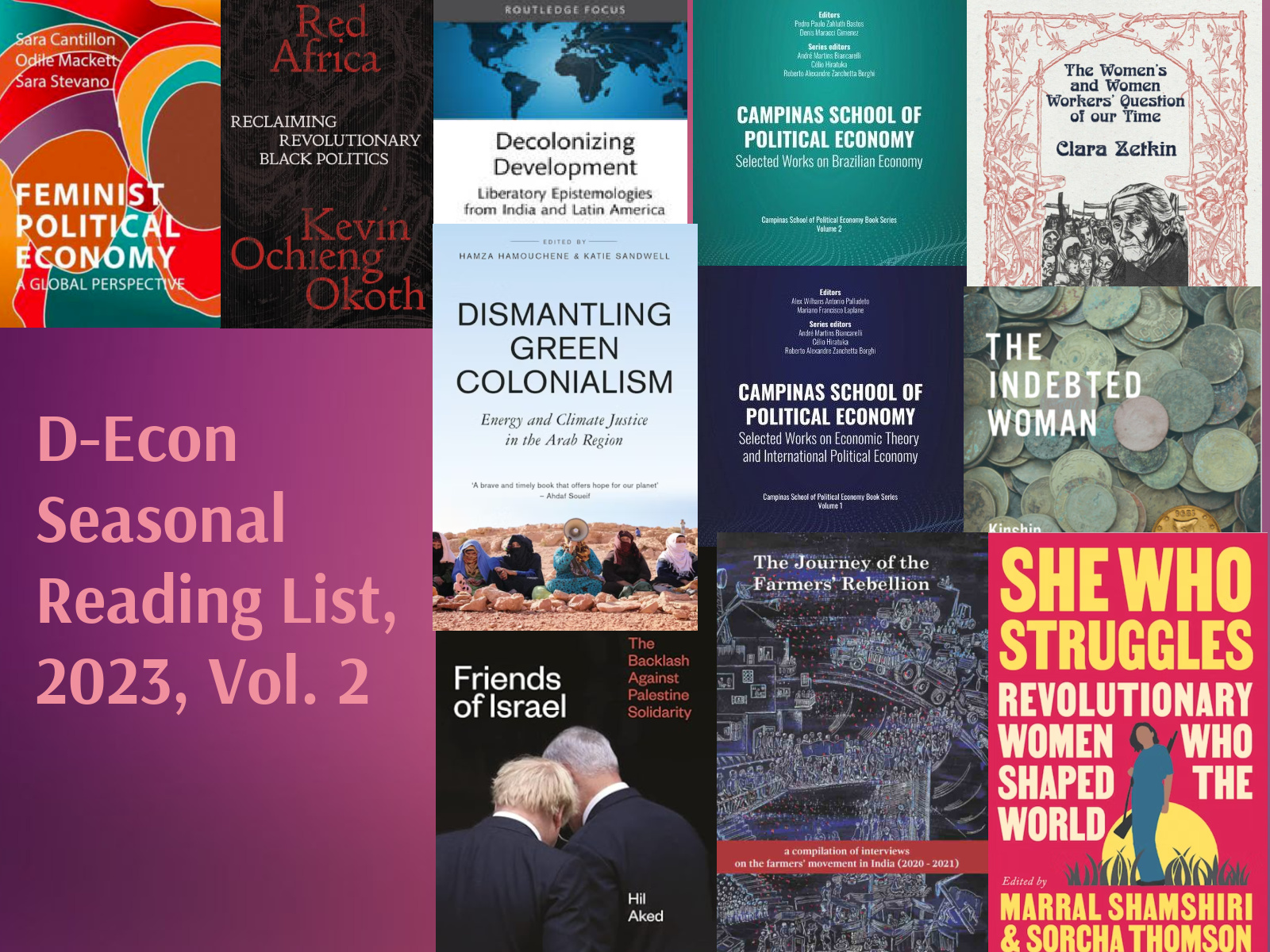
As the year comes to an end, and we head into the holiday season, here’s D-Econ’s second reading list, which has our recommendations of books published in the latter part of 2023 (see part 1 here). These include books you may have missed because of the identity of the author, or their geographical location, or because the topic is not typically considered interesting to those interested in reading about the economy. We include 11 books that cover a range of topics that we think provide a richer understanding of socioeconomic phenomena and are therefore crucial to understanding economics and the world.
Maybe it’s just us, but this year felt like one of those years which had several weeks in which decades happened, with intensifying indebtedness and genocide joining the ongoing climate catastrophe in a weird dystopic bacchanalia. Luckily, authors around the world have written books that can help us understand this convergence of crises, and serve as sources of hope and inspiration. It is no surprise then that we have many books on anti-imperial social, political, and economic movements. Specifically, we have been reading about the backlash against solidarity with the struggle of Palestinian liberation, revolutionary Black politics in Africa, a new translation of the work of legendary socialist Clara Zetkin, women engaged in “transformative, anti-colonial, anti-imperialist, and socialist projects” around the world, and a farmer’s rebellion in India. As economists, we firmly believe that it is impossible to understand the world and consequently the economy without learning from activists who respond to and help in shaping struggles for economic justice, and therefore, these books are a fundamental part of reading about economics.
However, in our heart of hearts, we are a group of nerds. Therefore, we also have been reading about often ignored economic theories and histories of thought. The relatively-more academic books that we include are accessible, and we hope that you can add them to your bookshelf (even if you don’t take them with you to beach or read them as light bedtime reading) and learn about feminist political economy, decolonizing development, and the history of economic thought from one of the foremost centres of economic knowledge in Brazil.
We hope you enjoy these books, and they energize you for the coming year. As always, please let us know if you have any suggestions for our next reading list.
Continue reading